
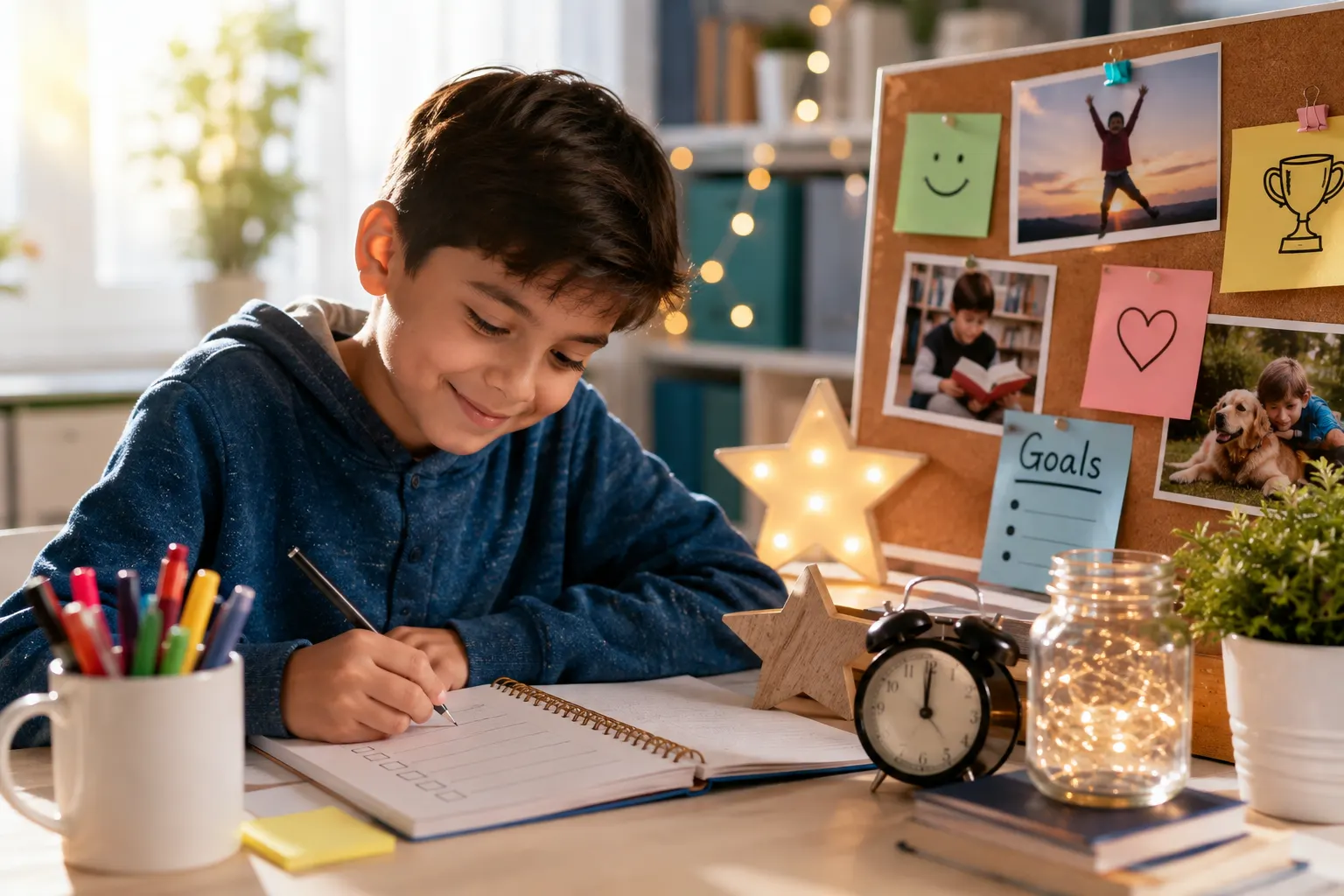
A new year is a fun time to think about what you would like to learn, try, change, or get better at. Maybe there is a hobby you’ve been curious about, a skill you wish you had, or something you’ve been promising yourself you’ll finally try.
Your resolution can be serious, silly, creative, practical, or somewhere in between. You might decide to read more books, learn how to cook pancakes, save your allowance for something special, spend more time outside, or become better at helping around the house.
The trick is choosing something that actually feels interesting to you. A resolution works much better when it feels like an adventure you want to take rather than a rule someone else gave you.
26 Exciting New Year Resolutions for Kids
1. Read a Book You Actually Want to Finish
Pick something that makes you curious enough to keep turning the pages. Maybe you’ve been eyeing a funny graphic novel at the library, a mystery with a ridiculous-looking detective, or a fantasy story your friend keeps talking about. That is a much better place to start than choosing a book simply because it seems “educational.”
If you want something measurable, make a small challenge for yourself. Twelve books over the year means one book each month, and you can keep a list of the ones you enjoyed most. Some months you might finish two, while another month gets busy and you finish none. Pick the list back up when you’re ready.
Parents can make reading more appealing by letting kids choose from several books rather than selecting every title themselves. A library trip can become part of the resolution, especially when children get to browse and discover something unexpected.
2. Learn Something You’ve Always Been Curious About
Think about the things that make you stop and ask, “How does that work?” Those questions can lead to some brilliant resolutions.
Perhaps you want to learn a few magic tricks, draw people better, play guitar, make simple animations, identify different birds, build Lego creations, bake, take photographs, or speak basic phrases in another language. Choose one and spend some time exploring it throughout the year.
You could make yourself a tiny challenge. If drawing interests you, sketch something every Saturday. If you’re learning an instrument, practice a short song until you can play it confidently. By the end of the year, you’ll have something concrete to show for all those small sessions.
3. Turn Your Bedroom Into a Place You Like
A bedroom doesn’t need to look like a picture from a magazine. It simply needs to work for you.
Start with the annoying stuff. Put books where you can find them, give your toys a proper home, keep school supplies together, and decide where dirty clothes belong. Once the basic mess is under control, you could add something fun, such as a drawing wall, a small reading corner, a collection display, or a handmade decoration.
Try taking a photo of your room before you begin and another one after you’ve finished. Seeing the difference can make tidying up surprisingly satisfying.
4. Become More Helpful Around the House
There are probably jobs around your home that you already know how to do but usually wait for someone to ask about.
This year, choose one responsibility that you can take ownership of. You might set the table, feed the family pet, put away your laundry, water plants, help unpack groceries, or tidy up after a family meal.
If you’re older, perhaps you can learn a job that nobody has taught you yet. Ask a parent to show you how to fold clothes properly, prepare a simple breakfast, organize a cupboard, or help with another everyday task.
Helping becomes much more meaningful when you start noticing what needs doing rather than waiting for instructions every time.
5. Spend More Time Outside
Think about how much time you spend indoors compared with how much time you actually spend exploring outside. Your resolution could be as simple as changing that balance.
Ride your bike, play football with friends, walk the dog, visit a playground, go on a family hike, draw in the garden, or take a walk and see how many interesting things you can spot.
You could even create a monthly outdoor challenge. Find a new park, watch a sunset, have a picnic, photograph five different birds, or collect interesting leaves for a craft project. Suddenly “go outside more” becomes a year full of little adventures.
6. Give a New Sport a Real Try
You don’t need to know whether you’re naturally good at a sport before you begin.
Maybe swimming looks fun, you’ve always wanted to try tennis, or your friends keep talking about basketball. Sign up for a beginner session, borrow some equipment, or try a few games with someone who already knows how to play.
The first few attempts may feel awkward. That’s part of being new at something. You might discover a sport you love, or you might decide it isn’t for you and move on to another one. Either outcome teaches you something useful.
7. Find a Better Balance With Screen Time
Screens are part of everyday life for most kids, so this doesn’t have to become an all-or-nothing battle.
Look at your usual routine and choose one change that feels realistic. Perhaps devices stay away during family meals, you take a break after a certain amount of gaming, or you keep the last part of your evening screen-free.
Then decide what you’ll do instead. A board game, comic, craft project, bike ride, Lego build, or phone-free chat with a sibling is much easier to choose when you’ve already thought of an alternative.
Parents can help by creating household rules that apply consistently. Children are more likely to accept screen boundaries when the adults around them follow reasonable boundaries too.
8. Discover Some New Foods You Like
There are probably foods you’ve never tasted simply because you’ve never had a reason to try them.
Make that your little experiment for the year. Pick one unfamiliar fruit, vegetable, breakfast, or snack every month and give it a fair chance. You could keep a scorecard and rate each one from one to ten.
You might find a new favorite, or you might discover that you really don’t like something. Both results are useful.
Cooking together can make this resolution more interesting because you get to see how an ingredient changes when it’s roasted, blended, baked, or mixed into another dish.
9. Learn to Make a Few Meals Yourself
Being able to feed yourself is a seriously useful skill, and it can start with very simple recipes.
Choose three things you’d like to learn during the year. Pancakes, pasta, scrambled eggs, sandwiches, smoothies, tacos, or a family favorite could all work.
Ask an adult to teach you the first time, then gradually take over more of the process. Keep your favorite recipes somewhere you can find them easily and write down any changes you discover.
You may even become the person who makes breakfast for everyone on a weekend.
For younger kids, adults should handle hot pans, sharp knives, ovens, and other equipment that isn’t safe for them to use independently.
10. Start Saving for Something You Really Want
Saving money becomes much easier when there’s something specific waiting at the end.
Suppose you receive $10 as an allowance. You might put $3 into a savings jar and keep the rest for spending. If you receive birthday money, you could decide in advance how much goes toward your goal.
Maybe you’re saving for a new game, art supplies, sports equipment, or a special outing.
Write the target on your jar or create a simple progress chart. Every time you add money, mark your progress. Watching yourself move closer to the goal can make waiting feel much more rewarding.
11. Make Kindness Part of Your Everyday Life
Kindness doesn’t need an audience.
You could save a seat for someone, invite another kid into a game, help a classmate understand an assignment, thank someone who helped you, compliment a friend, or check on someone who seems upset.
Try noticing opportunities instead of waiting for a special occasion.
One week, challenge yourself to do something thoughtful for a family member. The next week, focus on classmates or friends. You may find that small gestures become automatic after a while.
12. Get Braver About Making New Friends
Making a new friend can begin with something incredibly ordinary.
Say hello to someone you haven’t spoken to before. Ask what game they’re playing. Sit beside someone new at lunch. Join a club or activity where you don’t already know everyone.
You don’t need to walk into a room and become the most outgoing person there. One conversation is enough for one day.
If you’re shy, write down two or three easy questions beforehand. Asking someone what music they like, what games they play, or what they did over the weekend can give you an easy way into a conversation.
13. Plan More Family Time
Family time doesn’t have to mean an expensive day out.
Pick something everyone can enjoy once a week or once a month. You could have a board-game night, make homemade pizza, watch an old family favorite, go for a walk, visit a park, or let one family member choose the activity each time.
Older kids may enjoy helping plan the outing rather than simply being told where everyone is going.
The nicest part is often the ordinary conversation that happens while you’re doing something together.
14. Keep a Little Record of Things That Make You Happy
A happiness journal sounds fancy, but it can be incredibly simple.
At the end of the day, write down one thing that made you laugh, surprised you, or made the day better. Maybe your friend told a ridiculous joke, your team won a game, your dog did something funny, or your favorite dessert showed up after dinner.
If writing isn’t your thing, draw the moment or take a photo.
After several months, you’ll have a collection of little memories that might otherwise have disappeared into the blur of everyday life.
15. Take Better Care of Your Stuff
How many times have you searched everywhere for something that was sitting in the exact place you left it?
Give your belongings a little more attention this year. Put your headphones in the same place after using them. Keep your school supplies together. Return books when you’re finished. Put sports equipment away instead of leaving it wherever the game ended.
For something you really care about, create a proper storage spot.
This isn’t about having a perfectly organized life. It’s about making tomorrow’s version of you grateful that today’s version put things away.
16. Make School Mornings Easier
Mornings can feel much less chaotic when you prepare before going to sleep.
Pack your school bag, check your homework, put your shoes somewhere easy to find, and choose your clothes if that helps. A small checklist beside your bed or desk can keep you from forgetting something important.
After a couple of weeks, you may find that these steps happen without anyone reminding you.
Parents can encourage the routine without taking over every step. Give your child enough responsibility to practice doing it independently, then step in when something genuinely needs help.
17. Pick One School Subject to Get Better At
You don’t need to turn the entire school year into a competition.
Think about one subject where you would genuinely like to improve. Maybe fractions keep confusing you, writing takes forever, or science interests you and you want to understand more.
Break the resolution into something manageable. You might spend a little extra time practicing a difficult type of math problem or read a few stories each month to improve your writing.
And remember that improvement doesn’t always show up immediately in grades. Sometimes the first sign is simply realizing that something which once seemed impossible now makes a little more sense.
18. Get Comfortable Asking for Help
There is no prize for staying confused when someone could help you.
If a homework question makes no sense, ask your teacher or parent to explain it another way. If you’re having trouble with a friendship, talk to a trusted adult. If you don’t know how to do something, find someone who can show you.
You can even practice saying, “I understand this part, but I’m stuck here.”
That’s a much more useful skill than quietly pretending everything is fine.
19. Make Something New Every Month
Choose a blank calendar and give yourself one creative mission for each month.
January could be a comic. February could be a handmade card. March might be a cardboard invention. April could be a short story. Later in the year, try photography, painting, baking, crafts, music, or something completely different.
Don’t worry about making something worthy of a museum.
The fun comes from looking back at your January creation in December and seeing how your ideas changed.
20. Grow Something and Look After It
Growing a plant gives you a chance to watch a small project change over time.
Choose something suitable for your home, find out how much sunlight it needs, and learn when it should be watered. Give it a name if you want to. Keep a little record of new leaves or changes.
You might start with one easy plant and become interested enough to grow herbs, flowers, vegetables, or something else later.
It is also a nice way to learn that some things cannot be rushed. A plant grows on its own schedule.
21. Become a More Responsible Pet Helper
If you have a pet, there are probably things you can do to make its life a little happier.
Depending on your age and the type of animal, you might help with feeding, fresh water, playtime, grooming, or keeping its area tidy.
You could also make a special “pet time” routine where you spend a few minutes playing with or simply sitting beside your pet each day.
Adults should remain responsible for tasks that require more experience or could be unsafe, but children can still learn a lot by participating.
22. Practice Staying Calm When Things Go Wrong
Games get frustrating. Plans change. Someone takes your turn. Your Lego creation falls apart after an hour of work. Your favorite team loses.
Those moments are excellent opportunities to practice handling frustration.
When you feel yourself getting really annoyed, pause before reacting. Take a breath, walk away for a minute, or explain what is bothering you instead of immediately shouting.
You will still get frustrated sometimes. Everyone does. The useful part is learning that a bad moment doesn’t have to turn into a terrible afternoon.
23. Try One Thing That Makes You Nervous
Choose something that feels challenging but safe.
You might want to speak in front of your class, audition for a play, try out for a team, learn a difficult song, introduce yourself to someone new, or perform something you’ve practiced.
Start with the smallest version that still feels like a challenge.
If public speaking scares you, perhaps begin by reading something aloud to your family. If a sports trial makes you nervous, attend a practice first.
Courage isn’t always a dramatic moment. Sometimes it’s simply showing up while your stomach is doing somersaults.
24. Stop Measuring Yourself Against Everyone Else
There will always be someone who is faster, taller, louder, better at math, better at football, or more experienced at something you care about.
That doesn’t make your progress meaningless.
Instead of comparing your latest result with somebody else’s, look at where you started. Maybe you couldn’t ride a bike last year and now you can. Maybe your reading has become much smoother. Maybe you’ve learned a song that seemed impossible a few months ago.
Your own starting point is a much fairer comparison.
Parents can reinforce this by praising effort, persistence, curiosity, and improvement rather than constantly comparing children with siblings, classmates, or friends.
25. Create a Goal Jar
This one can keep your resolutions interesting throughout the year.
Find a jar and fill it with little ideas. Write down things you would like to try, places you’d like to visit, skills you’d like to learn, or helpful things you’d like to do.
You might write, “Bake cookies,” “Learn a magic trick,” “Visit a new park,” “Make a comic,” “Try a new fruit,” or “Have a family game night.”
When you’re bored or need an idea, pull out one piece of paper.
You can make the jar a family project too, with everyone contributing ideas. Some goals can be tiny, while others can become weekend adventures.
26. Choose One Big Adventure for the Year
End your list with something you can really look forward to.
Pick one experience that feels special enough to remember. Perhaps you want to visit a new city, go camping, see an aquarium, attend a sports game, explore a museum you’ve never visited, learn to ride a horse, or take a family road trip.
If the adventure costs money, start planning it together. Find out how much it might cost, decide what needs to be booked, and see whether there are smaller steps you can take toward making it happen.
Having one exciting experience on the calendar can give the whole year something to look forward to.
How to Choose a New Year Resolution You’ll Actually Enjoy
A good resolution starts with a question: What sounds exciting, useful, or interesting to me right now?
Think about something you’ve been curious about lately. Maybe you’ve watched videos about drawing, keep asking questions about space, want to become better at a sport, or wish you knew how to make your favorite breakfast.
Once you’ve picked an idea, shrink it down until it feels manageable.
“Become amazing at guitar” is a pretty enormous goal. “Learn three songs this year” gives you something concrete to work toward. “Get organized” is vague, while “pack my school bag before bed” tells you exactly what to do.
You might also choose one resolution for yourself, one related to your health or everyday habits, and one that benefits someone else.
For example, you could learn photography, spend more time outdoors, and help with dinner twice a week.
Easy Resolution Ideas for Younger Kids
Younger children usually do better with goals they can see and repeat.
A preschooler might enjoy putting toys away after playing, helping water a plant, choosing a bedtime story, or practicing sharing. A child in early elementary school could aim to read more often, help set the table, learn a simple recipe, or spend time outside each day.
Make the resolution concrete. “Be good” is difficult for a young child to understand, while “put your toys in the box before bedtime” gives them something they can actually remember.
A sticker chart can work well here, especially when the focus stays on encouragement rather than punishment.
New Year Resolution Ideas for Tweens and Older Kids
Older kids can take more ownership of their goals.
They might decide to save part of their allowance, learn a practical skill, improve in a particular subject, become more organized, try a new activity, or complete a creative project.
This is also a good age to involve them in the planning. Ask what they would like to accomplish instead of handing them a list of habits to follow.
If a tween says they want to learn photography, help them figure out what that means in practice. They could learn basic composition, take one photo each week, experiment with editing, and create an album by the end of the year.
That feels much more personal than simply telling them to “learn a hobby.”
How Parents Can Help Without Turning Resolutions Into Homework
The easiest way to take the fun out of a New Year resolution is to turn it into another daily lecture.
Let your child have some ownership. Offer ideas when they are stuck, but give them room to choose something that genuinely interests them.
Once they’ve picked a goal, help make the first step obvious. If they want to read more, take them to the library. If they want to cook, choose a beginner-friendly recipe together. If they’re saving for something, help them create a simple savings chart.
Check in occasionally rather than asking about the resolution every single day.
A child who forgets their goal for two weeks doesn’t need a speech about commitment. They can simply start again. The long-term lesson is learning how to return to something after losing momentum.
What to Do When a Resolution Falls Apart
Almost every resolution hits a rough patch eventually.
Maybe you planned to read every night but got busy with school. Perhaps you promised to keep your room tidy and then somehow managed to create an impressive mountain of clothes on the floor.
That doesn’t mean you failed.
Look at what happened and change the plan if necessary. If reading every night was too much, try three nights a week. If cleaning your entire room feels impossible, tidy one area at a time. If you no longer enjoy the activity you chose, think about what attracted you to it in the first place and find something related.
A resolution is allowed to change.
The point is learning how to set a goal, give it a real try, notice what works, and adjust when life gets in the way.
A Simple Three-Goal New Year Challenge
If choosing from 26 ideas feels like too much, pick three.
Choose one thing to learn, such as cooking, drawing, swimming, photography, or an instrument.
Choose one everyday habit, such as keeping your room organized, spending more time outside, reading regularly, or preparing for school the night before.
Then choose one thing you can do for other people, such as helping more at home, being kinder to classmates, spending time with a grandparent, or taking better care of a pet.
Write your three goals somewhere you’ll see them.
You could put them on your desk, make a colorful poster, add them to a calendar, or keep them inside your goal jar. Seeing them occasionally is often enough to bring them back to mind.
Final Thoughts
The best New Year resolution for a child isn’t necessarily the most impressive one. It might be learning to make pancakes, finally reading a book from start to finish, helping with dinner, making a new friend, growing a plant, or trying something that once seemed intimidating.
What matters is that the resolution belongs to the child.
A new year gives you plenty of time to experiment. Some goals will work beautifully, some will need changing, and a few might be forgotten completely. That’s part of the experience.
Choose something that makes you curious, take the first small step, and see what happens. By the time the next New Year arrives, you may have learned much more than you expected.
Leave a Reply
You must be logged in to post a comment.