
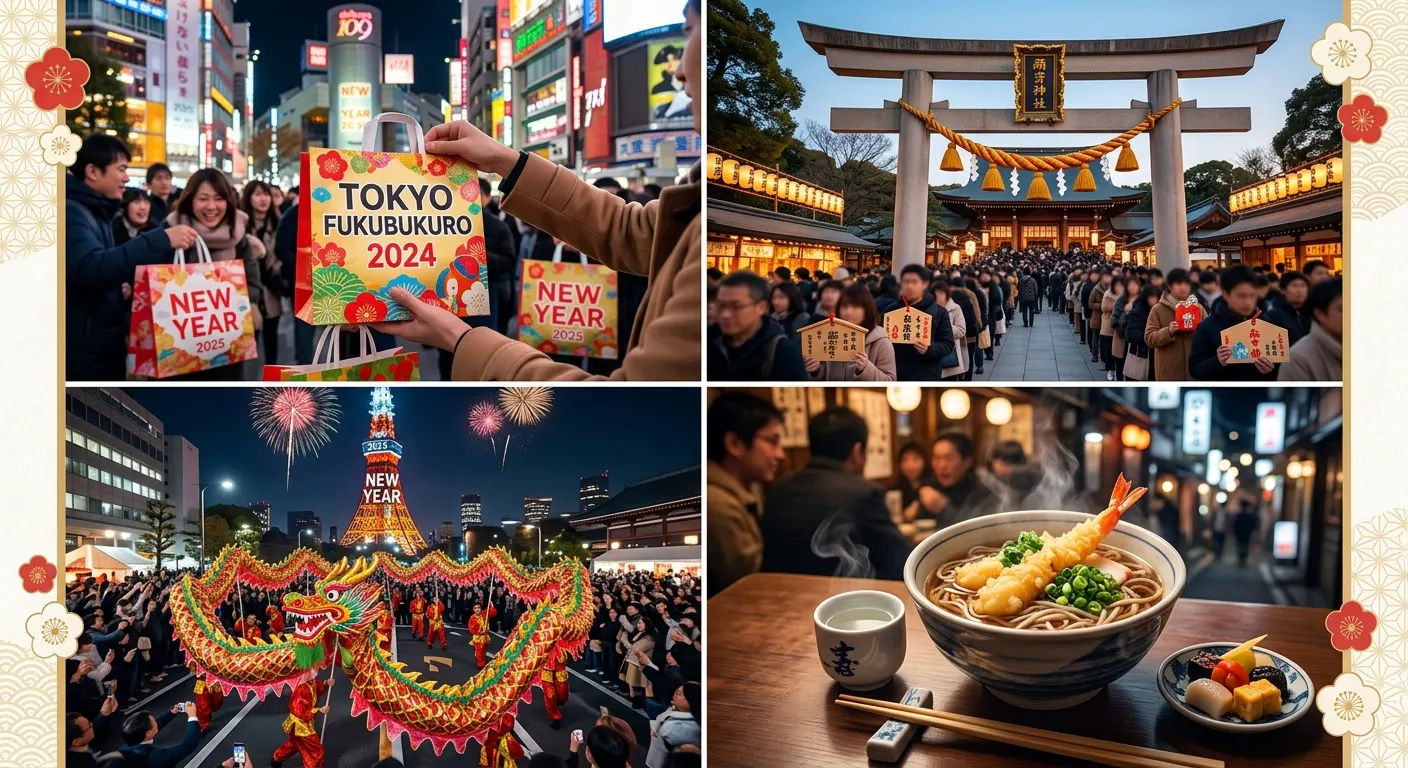
If you’re picturing fireworks and a massive countdown party, Tokyo’s New Year might catch you off guard. Oshogatsu, the Japanese New Year, is closer in spirit to a quiet family holiday than a citywide party. Streets go still, shops shutter for a few days, and most people are home with relatives or standing in a long, patient line outside a shrine at midnight, not packed into a square waiting for a ball to drop.
That’s not a disappointment, it’s actually the appeal. Tokyo trades fireworks for something more atmospheric: temple bells ringing 108 times into the cold night air, millions of people making their first shrine visit of the year, and a handful of very good modern alternatives for anyone who still wants music, lights, and a countdown. The 15 things below cover both sides of that experience, the traditional and the modern, so you can build a night that actually fits what you’re looking for.
Traditional Ways to Ring In the New Year
1. Make Your First Shrine Visit of the Year at Meiji Jingu
Hatsumode, the first shrine or temple visit of the new year, is the single biggest tradition in Japanese New Year culture, and Meiji Jingu is the most visited shrine in the entire country for it. Set inside a genuinely peaceful forest in the middle of Shibuya, the shrine draws millions of visitors across the first few days of January, all coming to pray for health, luck, and good fortune. Arrive right around midnight if you want the full experience of the crowd, or come a little later in the morning on January 1st if you’d rather move at a slower pace.
2. Join the Crowds at Senso-ji in Asakusa
Tokyo’s oldest temple pulls enormous crowds from December 31st through January 3rd, and there’s a real energy to it that’s hard to get anywhere else in the city. The approach to the temple lines up with food stalls selling warm snacks, and the whole scene has a festival feel even though the underlying purpose, offering prayers for the year ahead, is genuinely solemn. If the size of the crowd feels like too much, Kanda Shrine and Zojo-ji, the latter sitting right in the shadow of Tokyo Tower, both offer a similar hatsumode experience with noticeably shorter lines.
3. Listen to Joya no Kane, the 108 Bell Tolls
At midnight, Buddhist temples across the city strike a large bell exactly 108 times, a ritual meant to purify the 108 worldly desires believed to cause human suffering in Buddhist teaching. Standing outside a temple and listening to that slow, deliberate ringing carry through a cold December night is one of the more genuinely moving ways to experience the turn of the year in Tokyo, especially compared to a loud countdown party. Several temples let visitors ring the bell themselves, so it’s worth checking ahead if that’s something you want to take part in rather than just watch.
4. Watch the First Sunrise of the Year (Hatsuhinode)
Watching the year’s very first sunrise is its own dedicated tradition, called hatsuhinode, and it’s treated with the same reverence as the shrine visit that usually follows it. Mount Takao, just outside central Tokyo, is one of the most popular spots for it, along with observation decks at Tokyo Skytree and the waterfront around Tokyo Bay. Bundle up. Early January mornings in Tokyo run cold, and a lot of these spots get crowded well before sunrise as people stake out a good view.
5. Eat Toshikoshi Soba Before Midnight
Toshikoshi soba, literally “year-crossing noodles,” is the traditional dish eaten on New Year’s Eve, usually just before midnight. The long noodles symbolize a long life, and the tradition of slurping them down right at the edge of the new year has stuck around for centuries. It’s a simple, warm bowl of food, but eating it in Tokyo on December 31st connects you to a custom nearly every household in the country is doing at roughly the same time.
6. Try Osechi Ryori, Japan’s New Year Feast
Osechi ryori is a collection of traditional New Year foods, packed into elegant lacquered boxes called jubako, with each item carrying its own symbolic meaning, sweet black beans for health, herring roe for fertility, rolled kelp for happiness, among others. Department stores and specialty shops across Tokyo sell pre-made osechi boxes in the lead-up to New Year’s, and trying one, even a smaller version meant for two, is one of the more genuinely educational food experiences the holiday offers. A lot of restaurants also build special New Year’s menus around these same symbolic ingredients.
7. Draw an Omikuji Fortune and Snack Your Way Through the Yatai Stalls
Nearly every shrine visited during hatsumode offers omikuji, small paper fortunes you draw for a modest donation, ranging from great blessing down to great curse. It’s a quick, fun ritual on its own, and it pairs naturally with the food stalls, known as yatai, that line the approach to most major shrines during the New Year period. Warm amazake, a sweet fermented rice drink often given out free, along with taiyaki, oden, and yakitori, make the cold wait in line a lot more bearable.
Where to Watch Tokyo’s Countdown
8. Watch the Crowd Build at Shibuya Crossing
Shibuya Crossing has become an increasingly popular, informal countdown spot in recent years, even though it’s not an official organized event the way similar spaces are in other major cities. Expect a heavy police presence managing the crowd, and expect it to be genuinely packed as midnight approaches. It’s less structured than a planned countdown party, but there’s something fitting about ringing in the new year at one of the busiest, most photographed intersections on earth.
9. Catch the Countdown Projections at Tokyo Tower or Tokyo Skytree
Both of Tokyo’s iconic towers run special New Year’s events, including countdown projections timed to midnight, and both offer sweeping views over the city that make the moment feel bigger than watching from street level. Skytree in particular draws hatsuhinode crowds the following morning too, so an evening countdown followed by a first-sunrise viewing from a similar vantage point is a realistic, connected plan for the same visit.
10. Ring in the New Year on a Tokyo Bay Countdown Cruise
For something a little more upscale, several companies run New Year’s Eve countdown cruises around Tokyo Bay, taking in views of the Rainbow Bridge and Tokyo Tower from the water. Cruises like the one run by The Cruise Club Tokyo typically include drinks, hotel-prepared snacks, toshikoshi soba, and live music, giving you a version of the midnight moment that mixes tradition with a genuine party atmosphere.
11. See the Countdown Musical Concert at Tokyo International Forum
For a quieter, more artistic way to spend the final hours of the year, the Tokyo International Forum hosts a Countdown Musical Concert featuring orchestral performances and well-known musical numbers building toward midnight. It’s a solid pick for anyone who wants the emotional weight of a live performance without the noise of a street party or nightclub.
12. Watch Kohaku Uta Gassen, Japan’s Biggest New Year’s Eve TV Tradition
Even if you’re out and about, it’s worth knowing about Kohaku Uta Gassen, NHK’s annual New Year’s Eve music broadcast, since you’ll likely see it playing in bars, izakayas, and even some shop windows across the city. The show pits a Red Team of female artists against a White Team of male artists in a friendly singing competition that builds right up to midnight, and it’s been a genuine national institution for decades. Watching a bit of it, even without understanding every word, is a real window into how much of Japan is actually spending its New Year’s Eve, at home, in front of the television.
For a More Modern New Year’s Eve
13. Go Hunting for Fukubukuro “Lucky Bags”
Starting January 1st or 2nd, retailers across Tokyo sell fukubukuro, sealed “lucky bags” filled with a surprise mix of merchandise worth more than the bag’s price, as a way of thanking customers for the year behind them. These range from snack-filled grab bags to genuinely high-end luxury brand versions, and hunting for a good one at Ginza’s department stores has become its own New Year’s tradition for shoppers, alongside the more spiritual hatsumode crowds nearby.
14. Dance Into the New Year at a Tokyo Nightclub
If a quiet countdown isn’t what you’re after, Tokyo’s club scene throws some genuinely major New Year’s Eve parties. Venues like Womb, Circus Tokyo, and ZeroTokyo bring in international DJs specifically for the occasion, past lineups have included names like London Elektricity and Skream, for a countdown that looks a lot more like New Year’s Eve in London or New York than the temple-and-bell version happening a few train stops away.
15. Spend the Holiday at teamLab Planets
For something that doesn’t fit neatly into either the traditional or party category, teamLab Planets offers an immersive, ultra-modern digital art experience that makes for a genuinely memorable way to spend part of the holiday period. It’s not New Year’s-specific programming, but visiting during the quieter days around the holiday, when a lot of Tokyo’s usual crowds are occupied elsewhere, gives you a noticeably calmer visit than you’d get on a typical weekend.
What to Know Before You Go
A few practical things are worth knowing before building a Tokyo New Year’s itinerary. Many restaurants, shops, and smaller attractions close for a few days, typically December 31st through January 3rd, so don’t assume everything will be open the way it would on an ordinary week. Convenience stores and some chain restaurants stay open through the holiday, which makes them a reliable fallback for food if a favorite spot turns out to be closed.
Hotel prices climb noticeably around the holiday, and rooms near major hatsumode spots like Asakusa and Harajuku book up early, so it’s worth locking in a place to stay well before December if a specific shrine or neighborhood is the centerpiece of the trip. And if the crowds at Meiji Jingu or Senso-ji sound like more than you want to deal with, remember that hatsumode technically runs through January 3rd, with some traditions extending it as late as January 7th. Visiting a day or two after the 1st, or choosing a smaller neighborhood shrine over one of the famous names, gets you the same ritual with a fraction of the wait.
FAQs
Are there fireworks in Tokyo on New Year’s Eve?
Not in the way most visitors expect. Tokyo doesn’t run a major citywide fireworks display for New Year’s the way cities like Sydney or Dubai do. Instead, the city’s main New Year’s traditions center on temple bells, shrine visits, and a first sunrise, with fireworks showing up more around summer festivals than the New Year holiday.
Is Tokyo open on New Year’s Day?
Partially. Convenience stores and some chain restaurants stay open, but many smaller restaurants, shops, and attractions close for a few days, typically from December 31st through January 3rd. Major shrines are a clear exception, since hatsumode crowds are exactly what draws people out during this stretch.
What is the best shrine to visit for hatsumode if I want to avoid huge crowds?
Meiji Jingu and Senso-ji draw the biggest crowds by far. Kanda Shrine and Zojo-ji offer a similar first-visit-of-the-year experience with noticeably shorter lines, and visiting any shrine a day or two after January 1st, or waiting until closer to January 3rd, cuts down on the wait considerably.
Do I need to book anything in advance for New Year’s in Tokyo?
Hotels near popular hatsumode neighborhoods like Asakusa and Harajuku fill up early and get noticeably more expensive as the holiday approaches, so booking a room well ahead of December is worth it. Countdown cruises, nightclub events, and the Tokyo International Forum concert also tend to sell out closer to the date, so reserving spots for any of those in advance is a good idea too.
What should I wear to a shrine visit at midnight in Tokyo?
Layer up. Late December and early January nights in Tokyo run cold, often close to freezing, and hatsumode involves standing in an outdoor line, sometimes for a long stretch, before you actually reach the shrine. A warm coat, gloves, and something to keep your hands around a hot drink from a yatai stall will make the wait far more comfortable.
Whichever version of the night you end up building, the quiet reverence of a temple bell at midnight and the neon energy of a Shibuya countdown are both, genuinely, what Tokyo’s New Year looks like. Most visitors end up happiest picking one or two traditional experiences to anchor the trip, then filling the rest of the days around them with whichever modern spots fit the mood.
Leave a Reply
You must be logged in to post a comment.