
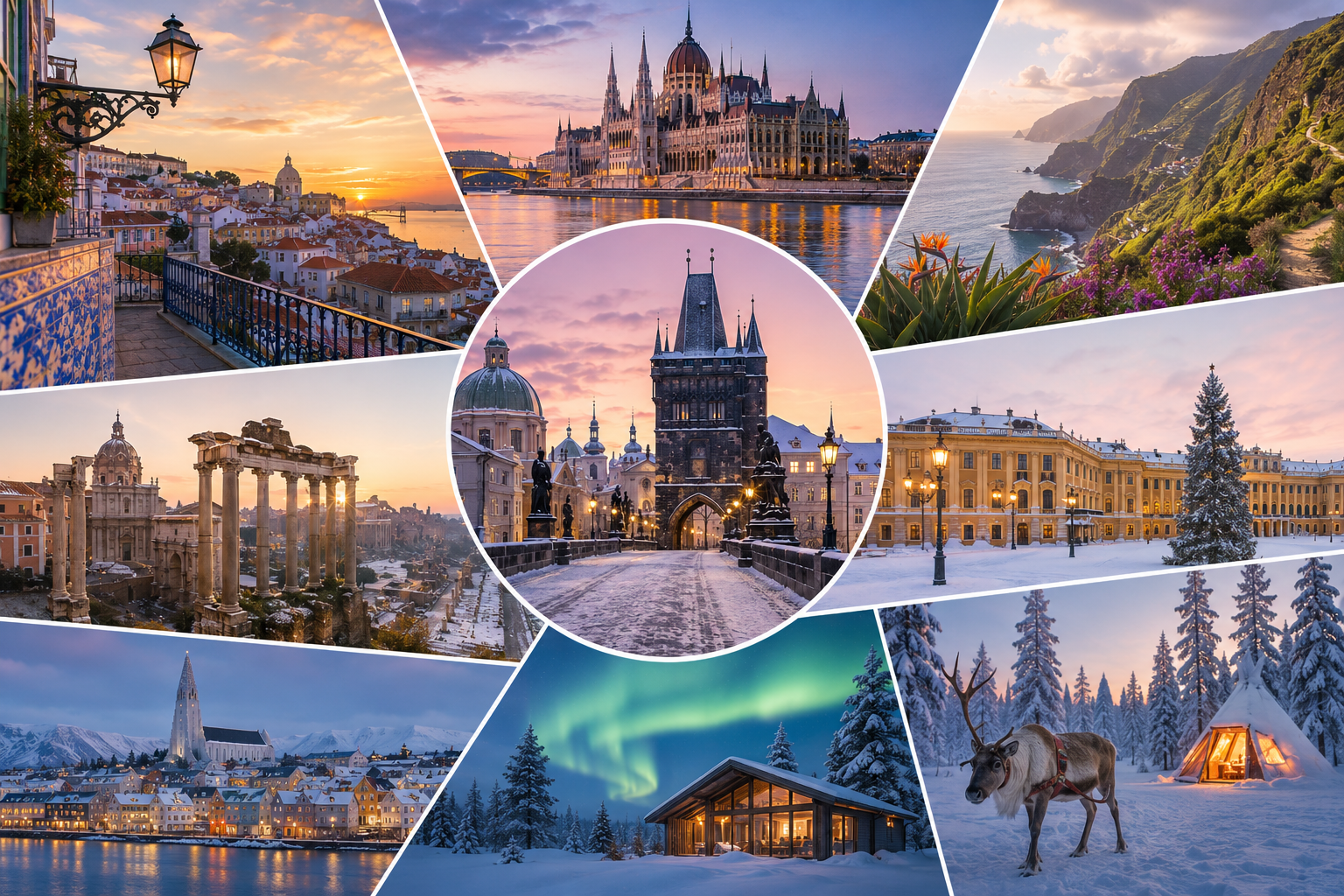
The best place to visit in Europe for New Year depends on the kind of trip you actually want once December 31 is over. A traveler chasing thermal baths and architecture will pick a different city than one chasing Arctic snow, ancient ruins, or mild winter sun. This guide compares ten European destinations by what you can realistically see and do across a 3 to 7 day trip, not by which city has the loudest countdown.
For compact historic sightseeing, choose Prague. For thermal bathing and architecture, choose Budapest. For museums and imperial culture, choose Vienna. For ancient landmarks in milder weather, choose Rome. For hills, viewpoints, and walkable neighborhoods, choose Lisbon. For an outdoor nature escape, choose Madeira. For a warmer southern European city break, choose Seville. For geothermal landscapes and dramatic nature, choose Reykjavík. For a true Arctic trip, choose Rovaniemi. For layered history and a walkable winter city, choose Edinburgh.
Each of these destinations is covered in detail below, including what is genuinely free, what requires a paid ticket, how families and travelers with mobility needs should plan, and what to expect from opening hours around December 31 and January 1.
How to choose the right European destination for a New Year trip
Before comparing individual cities, it helps to narrow the decision down to a few practical questions. These matter more than a generic ranking, because the right destination changes depending on the answers.
Do you want snow, mild weather, or winter sun?
Rovaniemi and Reykjavík deliver genuine winter landscapes, with snow, ice, and short daylight hours shaping the entire itinerary. Prague, Vienna, Budapest, and Edinburgh sit in the classic cold-but-manageable range, where daytime sightseeing is normal but layered clothing and indoor backups matter. Lisbon, Rome, Seville, and Madeira are milder, though none of them should be treated as a guaranteed sunny escape. Rain and wind are still possible in all four.
Are you planning a city break or a nature trip?
Prague, Vienna, Budapest, Rome, Lisbon, Seville, and Edinburgh are built around walkable historic centers. Madeira, Reykjavík, and Rovaniemi are built around landscapes, with the city or town acting as a base rather than the main attraction. This distinction changes how much you need a car, how weather-dependent your days are, and how far in advance you need to book activities.
How many days do you have?
A 3 to 4 day trip works well for Prague, Budapest, Seville, and Edinburgh, where the core sights sit close together. Rome, Vienna, and Lisbon generally reward 4 to 6 days. Madeira, Reykjavík, and Rovaniemi benefit from 5 to 7 days because travel time, weather delays, and the distance between attractions eat into shorter trips.
Are you traveling with children?
Vienna and Rovaniemi tend to offer the most structured family options, with dedicated children’s spaces and indoor backups for bad weather. Rome and Edinburgh work well for families with older children interested in history, provided the itinerary includes rest breaks. Very young children may find long historic walking tours tiring regardless of destination.
How much do holiday closures matter to your itinerary?
If your trip is short, closures matter a lot, because losing a day to a closed attraction is harder to absorb. Destinations with a strong free outdoor core, such as Prague’s bridges and squares or Seville’s Plaza de España, give you a fallback plan if a paid attraction has reduced holiday hours.
Do you need accessible sightseeing options?
No European city in this guide should be treated as uniformly accessible. Historic centers generally mix cobblestones, stairs, and older buildings with specific accessible routes and facilities. Vienna and Prague publish some of the most detailed official accessibility information among the destinations covered here, but every attraction still needs to be checked individually before travel.
Prague for a classic winter city break
Why Prague works especially well for a New Year trip
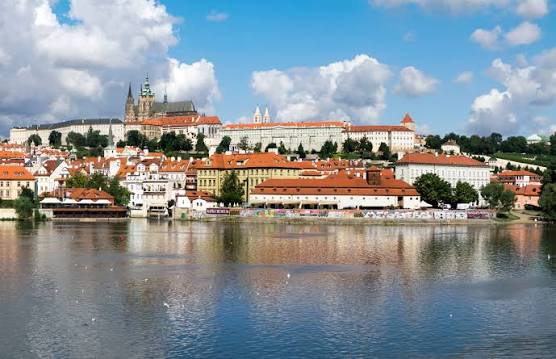
Prague’s core sights sit close enough together to cover on foot, which makes it a strong choice for a first European winter trip or a shorter getaway. The city center is compact, the main landmarks are within walking distance of each other, and the visual character of the historic district holds up in winter light.
Prague Castle and the Castle District
Prague Castle sits in the Hradčany district, on high ground above the Vltava River. The exterior courtyards and grounds are open to the public separately from the ticketed historic interiors, which include the cathedral and palace spaces. The official winter tourist season runs from November 1 to March 31, with the historic buildings generally open from 9:00 to 16:00, while the wider castle grounds keep longer hours. Plan on 2 to 4 hours for a proper visit. Booking ahead is recommended during the holiday period, and exact ticket prices should be checked on the official site before travel since categories can change.
Charles Bridge and the Old Town
Charles Bridge connects the Castle District side of the river with Prague’s Old Town and is free to walk at any time. Paired with the surrounding Old Town streets, it forms a 1 to 3 hour walking route that works as either a main activity or a flexible backup if a paid attraction has reduced holiday hours. Early morning is the best time to cross, before pedestrian traffic builds up.
What to know about winter opening hours
Prague City Tourism publishes specific holiday-season hour changes for its visitor services and major sights, so it is worth checking these directly for December 31 and January 1 rather than assuming standard hours apply. Because winter daylight is limited, schedule outdoor viewpoints and the castle visit earlier in the day.
Who Prague is best for
Prague suits first-time visitors to Europe, couples, and travelers who want a short, geographically simple trip with a strong castle-and-bridge anchor. It also works well for a 3 to 4 day trip that does not require a car.
Accessibility and mobility considerations
Prague’s historic paving and cobblestones create real challenges in parts of the Old Town and Castle District. Official Prague tourism accessibility information identifies specific adapted routes and facilities, including a lift system at the Old Town Hall tower, but some areas, such as Golden Lane within the castle complex, have documented limitations. Pet policies should be checked attraction by attraction rather than assumed.
Budapest for thermal baths, architecture, and Danube views
Why Budapest offers a different kind of winter trip
Budapest earns its place on this list because of an activity most other European capitals cannot replicate in winter: outdoor thermal bathing combined with historic sightseeing. That combination changes what a cold or wet day in Budapest looks like compared with a typical city break.
Thermal bathing as a daytime activity
Széchenyi Thermal Bath sits in City Park on the Pest side and offers outdoor and indoor thermal pools. It is a paid attraction, and advance booking is strongly recommended during the holiday period since demand rises. Plan for 2 to 4 hours, and check current pricing and any age-related facility rules directly with the operator before your trip, since these details change and should not be assumed. It suits couples and adults especially well, and works as an itinerary anchor on a day when outdoor sightseeing is less appealing.
Exploring Buda and Pest
Buda Castle District, on the hilly west bank of the Danube, offers historic streets and river viewpoints. Public streets and viewpoints are generally free to explore, while individual museums and attractions inside the district charge separate admission. The hills and inclines here mean mobility-limited travelers should plan routes carefully.
Danube viewpoints and indoor sightseeing
Combine a walk along the Danube embankments with Heroes’ Square and the area around Vajdahunyad Castle near City Park, all reachable on the same side of the river as Széchenyi. This groups Budapest’s outdoor sightseeing and its signature thermal experience into one geographic zone, reducing cross-city travel time.
Who should choose Budapest
Budapest is a strong fit for a 3 to 4 day trip for couples or travelers who want architecture paired with a genuinely different daytime activity rather than another walking tour.
Vienna for museums, palaces, and indoor winter culture
Why Vienna is strong when the weather is cold
Vienna holds up better than most European cities when outdoor conditions turn unpleasant, because its major attractions lean indoor: palaces, museums, and a historic center built for walking between covered spaces.
Schönbrunn Palace and its winter options
Schönbrunn Palace sits in the Hietzing district, southwest of the city center. Palace interiors require a paid, timed ticket, while the park grounds and gardens follow separate access rules. According to the palace’s official 2026 ticket page, a State Apartments ticket for adults is listed at €30, with other combined tickets priced differently and subject to seasonal change, so this should be reconfirmed before booking. A compact State Apartments visit takes about 40 minutes, while a fuller visit combining the gardens and additional attractions can run several hours. Booking ahead is important for busy periods, including the New Year window.
Museums and historic-center sightseeing
Vienna’s MuseumsQuartier and historic center give the city a strong indoor sightseeing backbone that complements the palace visit, letting travelers shift an entire day indoors if weather turns.
Planning a family visit
Schönbrunn’s official FAQ states that wheelchair users can visit the palace barrier-free, including the ground-floor Children’s Museum, with lift access to upper display rooms. This makes Schönbrunn one of the more clearly documented family and accessibility options among the destinations in this guide, though pet policies still need to be checked separately, since ordinary pets and assistance animals are typically treated differently.
Who should choose Vienna
Vienna suits families, culture-focused travelers, and anyone prioritizing a New Year trip that does not depend heavily on outdoor weather. A 3 to 5 day trip gives enough time for the palace, the museum district, and the historic core without rushing.
Rome for ancient landmarks without peak summer heat
Why Rome is a strong New Year travel destination
Rome’s major ancient sites are usually associated with summer crowds and heat. A New Year trip avoids both while keeping access to the same landmarks, provided holiday closures are checked in advance.
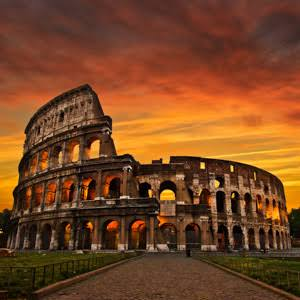
The Colosseum, Roman Forum, and Palatine Hill
These three sites form a single archaeological park in central Rome and can realistically be covered in one extended visit. Entry is paid, and Rome’s official tourism authority strongly recommends advance booking, particularly around the holiday period. Budget 3 to 5 hours for a proper visit, ideally starting at first entry to make the most of limited winter daylight. According to the official 2026 listing from Rome’s tourism authority, the Colosseum Archaeological Park is closed on January 1, so this date should not be used for this visit without rechecking the current schedule closer to travel.
Free walks through ancient and historic Rome
The streets surrounding the archaeological park, including the area along Via dei Fori Imperiali, are free to walk and give strong views of the ruins even without a ticket. This makes a useful backup plan for January 1 or any day when the paid site is closed.
Monti and the central sightseeing districts
Monti, just north of the Colosseum, is a walkable neighborhood suited to a slower day of cafés, small shops, and side streets, and pairs naturally with a morning at the archaeological park.
January 1 closure planning
Because the Colosseum Archaeological Park’s January 1 closure is documented by Rome’s own tourism authority, build outdoor walking and neighborhood exploring into that day instead, and shift ticketed sites to December 29, 30, or after January 2.
Lisbon for viewpoints, neighborhoods, and milder winter exploring
Why Lisbon suits travelers avoiding deep winter cold
Lisbon’s winter weather is milder than Central and Northern Europe, though rain is still common, so it suits travelers who want outdoor walking without the coldest conditions Prague or Edinburgh can bring.
Alfama and São Jorge Castle
Alfama is Lisbon’s oldest district, defined by narrow lanes and hilltop views. São Jorge Castle sits within this area as the main paid anchor attraction, while the surrounding streets and viewpoints are free to explore.
Baixa, Chiado, and the central city
Baixa and Chiado offer flatter, more level walking than the steep lanes of Alfama, making them a more comfortable option for travelers concerned about hills or uneven surfaces.
Belém as a separate sightseeing day
Belém sits apart from central Lisbon and is best treated as its own half-day or full-day trip rather than squeezed into an Alfama itinerary, since combining both areas in one day usually means rushing at least one of them.
Hills, cobblestones, and mobility considerations
Lisbon’s hills and historic paving are a genuine mobility factor, more so than in flatter European cities. Public transport, including the funicular routes, can reduce the amount of uphill walking required. Exact holiday-period hours for São Jorge Castle and other paid sites should be verified directly before travel.
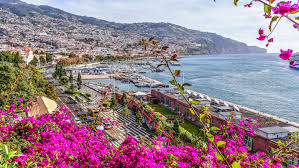
Madeira for an outdoor New Year trip
Why Madeira is different from a European city break
Madeira is the clearest alternative in this guide to a conventional city break. Its appeal is landscape rather than architecture, which makes it a strong choice for travelers who want an active, scenery-led New Year trip instead of another historic center.
Funchal as a base for sightseeing
Funchal, Madeira’s main town, works as the practical base for accommodation, dining, gardens, and transport connections to the rest of the island.
Levada walks and natural landscapes
Levada walks, Madeira’s network of walking paths along historic irrigation channels, are what set the island apart from a typical winter city trip. Specific routes should not be chosen without checking current official conditions, since closures, weather impact, and difficulty levels vary and change over time.
Botanical and mountain experiences
Madeira’s gardens and mountain areas add lower-effort sightseeing options for days when a longer hike is not practical, though conditions in the mountains can differ sharply from conditions in Funchal itself.
Weather and road planning
Rain, wind, and mountain cloud cover can change quickly on Madeira, so itineraries should build in flexibility rather than locking every day to a specific outdoor plan. Accessibility varies dramatically by trail and should never be assumed to be general across the island. A 5 to 7 day trip gives enough buffer to reschedule around weather.
Seville for southern Spain’s outdoor winter sightseeing
Why Seville works for travelers seeking warmer conditions
Seville offers some of the mildest daytime conditions on this list, along with a historic center dense enough for efficient walking sightseeing over a short trip.
Real Alcázar, Cathedral, and historic center
The Real Alcázar is Seville’s major paid architectural attraction, and advance timed entry is recommended. A visit takes roughly 1.5 to 3 hours and pairs naturally with the nearby Cathedral and the Santa Cruz district. Current pricing and holiday hours should be confirmed on the official ticketing page before booking.
Plaza de España and Maria Luisa Park
Plaza de España and the surrounding Maria Luisa Park are free or low-cost outdoor spaces that balance out the paid historic sites, and they work well as a flexible backup if a ticketed attraction has reduced holiday hours.
A walkable route through the major districts
Santa Cruz, the Cathedral area, and Plaza de España sit close enough together to combine into a single day of walking, which supports a compact 3 to 4 day trip.
Who should choose Seville
Seville suits travelers who want a warmer southern European city break with strong architecture and outdoor sightseeing, without the longer travel times required by Madeira or Iceland.
Reykjavík for a New Year trip built around Icelandic landscapes
What to do in Reykjavík itself
Reykjavík functions as the urban base for the trip rather than the main attraction. The city center, including the area around Hallgrímskirkja, the waterfront, and the Harpa concert hall district, supports a day or two of walking, museums, and food before heading out to the landscapes that make Iceland distinctive.
How to add a geothermal experience
A geothermal lagoon visit is a separate activity that requires its own booking and transportation planning, and not every Icelandic lagoon offers the same experience or accessibility, so they should not be treated as interchangeable.
Golden Circle versus Reykjanes Peninsula
The Golden Circle is the classic full-day route covering some of Iceland’s best-known natural sites. The Reykjanes Peninsula can be a practical alternative depending on where you are staying, your airport transfer timing, and current road conditions.
Winter weather and road safety
Daylight hours are short, weather can shift quickly, and road conditions directly affect whether a planned route is realistic on a given day. Tour cancellations due to weather are a real possibility and should be planned around rather than treated as unlikely.
Why flexibility matters more here than in a European capital
Unlike Prague or Vienna, where a rained-out day simply means switching to an indoor museum, a weather-disrupted day in Iceland can cancel an entire planned excursion. Build at least one buffer day into a 4 to 7 day Iceland trip.
Rovaniemi for snow, Arctic landscapes, and family travel
Why this is a destination trip rather than a conventional city break
Rovaniemi is not a substitute for a European capital city break. It is a dedicated Arctic trip, and travelers should plan for extra travel time and an itinerary built around cold-weather logistics rather than a dense historic center.
Arktikum and indoor Arctic culture
Arktikum is Rovaniemi’s main indoor cultural and educational attraction, useful as an anchor for a day with severe weather. It is a paid attraction with a visit lasting roughly 2 to 3 hours. Current pricing, any required advance booking, and accessibility details should be confirmed through the official Rovaniemi tourism authority and museum website before travel, since these are not fixed and need verification closer to your dates.
Outdoor Arctic activities
Snow and Arctic activities, including animal encounters and outdoor excursions, vary by operator in availability, minimum age requirements, and weather dependency. None of these should be assumed to run on a fixed schedule regardless of conditions.
Daylight, cold weather, and clothing planning
Daylight hours are very limited in Rovaniemi around the New Year period, which affects how much can realistically be scheduled outdoors in a single day. Cold-weather clothing is a practical requirement rather than an optional add-on.
Is Rovaniemi worth the extra travel time?
For families or travelers specifically seeking snow and Arctic scenery, yes. For travelers who mainly want a walkable historic city, Prague, Vienna, or Edinburgh will be a better match for the time invested.
Edinburgh for history, viewpoints, and compact sightseeing
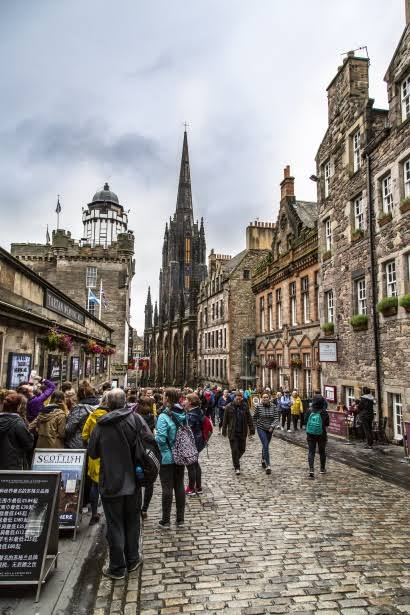
Edinburgh Castle and the Royal Mile
Edinburgh Castle anchors the top of the Royal Mile and is the city’s major paid historic attraction. Advance booking is advisable during busy holiday periods, and a visit runs 2 to 3 hours. Current ticket pricing should be checked on the official site before booking.
Old Town and New Town walking routes
Edinburgh’s Old Town and New Town sit close together and both reward walking, giving the city a strong self-contained sightseeing core that suits a 3 to 4 day trip without a car.
Museums and indoor options for bad weather
The National Museum of Scotland and other central museums provide indoor backup options for days when Edinburgh’s winter weather, which regularly includes wind and rain, makes extended outdoor sightseeing less comfortable.
Winter hiking and Arthur’s Seat
Arthur’s Seat adds a nature and viewpoint element to the trip, but it is not appropriate for all mobility levels, and winter wind, rain, darkness, and slippery conditions can change whether it is a reasonable option on a given day. Treat it as weather-dependent rather than a guaranteed daily activity.
Who should choose Edinburgh
Edinburgh suits travelers who want layered history, strong viewpoints, and a walkable city center, along with families interested in castles and museums who can pace a trip around younger children’s stamina.

Which of these European destinations is best for your travel style?
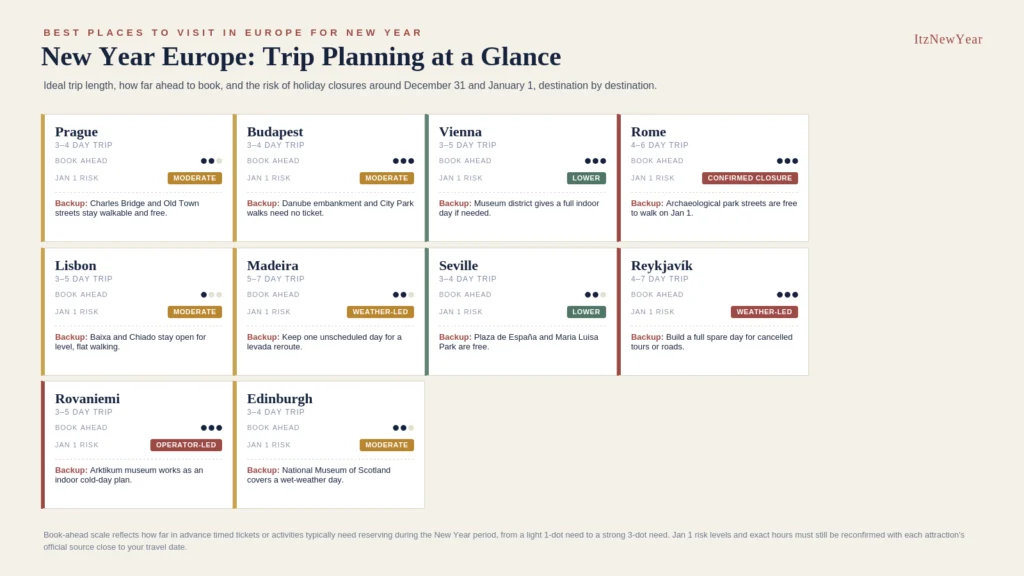
| Destination | Best for | Weather style | Trip length | Biggest advantage | Biggest planning challenge |
|---|---|---|---|---|---|
| Prague | First-time visitors, couples | Cold, classic winter | 3 to 4 days | Compact, walkable core | Cobblestones affect mobility |
| Budapest | Couples, relaxation | Cold, snow possible | 3 to 4 days | Thermal bathing as daytime activity | Booking baths ahead of holidays |
| Vienna | Families, culture travelers | Cold, indoor-friendly | 3 to 5 days | Strong indoor backup options | Timed palace entry demand |
| Rome | History travelers, couples | Mild, some rain | 4 to 6 days | Major sites without summer heat | January 1 closures |
| Lisbon | Walkers, mild-weather seekers | Mild, occasional rain | 3 to 5 days | Neighborhood variety and viewpoints | Hills and uneven paving |
| Madeira | Outdoor and nature travelers | Mild, changeable | 5 to 7 days | Landscape and hiking variety | Weather-dependent routes |
| Seville | Warm-weather seekers | Mildest on this list | 3 to 4 days | Compact, walkable historic core | Advance timed entry needed |
| Reykjavík | Nature travelers, photographers | Severe winter | 4 to 7 days | Dramatic natural landscapes | Weather-dependent excursions |
| Rovaniemi | Families, Arctic seekers | Arctic, very cold | 3 to 5 days | Genuine Arctic experience | Extra travel time, short daylight |
| Edinburgh | History travelers, families | Cold, windy | 3 to 4 days | Layered, walkable history | Weather affects Arthur’s Seat |
Best for couples
Budapest, for the combination of thermal bathing and architecture, and Lisbon, for its viewpoints and walkable neighborhoods, both suit a couples-focused short trip well.
Best for families
Vienna and Rovaniemi offer the most structured family options, one indoor and museum-focused, the other built around snow and Arctic activities.
Best for a first Europe trip
Prague’s compact, walkable core makes it one of the easiest destinations on this list to navigate without prior experience traveling in Europe.
Best for mild weather
Seville, Madeira, Lisbon, and Rome are the mildest options here, though none should be treated as guaranteed sunny or warm.
Best for snow
Rovaniemi is the strongest choice for a genuine Arctic snow experience.
Best for museums
Vienna’s museum district and palace complex give it the deepest indoor sightseeing option on this list.
Best for outdoor adventure
Madeira and Reykjavík both center the trip around landscape and outdoor activity rather than a historic city core.
Best for a 3-day trip
Prague, Budapest, Seville, and Edinburgh all have compact enough centers to work on a short trip.
Best for a 5 to 7 day trip
Madeira, Reykjavík, and Rovaniemi benefit from the extra time because of travel distances and weather-dependent planning.
What is actually open around New Year in Europe?
Why January 1 should not be treated like a normal sightseeing day
Many major attractions across Europe change their hours or close entirely around the New Year period. Rome’s official tourism authority lists the Colosseum Archaeological Park as closed on January 1, and Prague City Tourism publishes specific holiday-season hour changes for its visitor services. Treat January 1 as a day to verify in advance, not a day to assume normal access.
What to book before your trip
Book flights, accommodation, and any major timed-entry attraction well ahead of travel. This includes geothermal lagoon visits in Iceland, Arctic activities in Rovaniemi, high-demand museums, and palace timed entry in Vienna.
How to build a backup itinerary
Pair each day with one outdoor option and one indoor option where possible. Free outdoor spaces, such as Charles Bridge in Prague, Plaza de España in Seville, or the streets around Rome’s archaeological park, work well as flexible backups if a paid attraction has reduced holiday hours or unexpected closures.
Why official holiday hours must be rechecked
Holiday hours change from year to year and are sometimes updated close to the date. Recheck December 31 and January 1 hours for your specific attractions 7 to 14 days before travel, and again 24 to 48 hours before for weather-sensitive destinations like Iceland, Madeira, and Rovaniemi.
Practical tips for traveling in Europe around New Year
- Book major attractions, especially timed-entry sites, before arrival rather than assuming walk-up availability during the holiday period.
- Check holiday transport schedules for trains, buses, and airport transfers, since services often run on reduced timetables.
- Plan around short daylight hours, particularly in Rovaniemi, Reykjavík, Edinburgh, and Prague, by scheduling outdoor viewpoints and longer visits earlier in the day.
- Build one outdoor and one indoor option into each day so a closure or bad weather does not derail the whole itinerary.
- Pack for the specific destination rather than “Europe” in general. Madeira and Seville need different clothing than Rovaniemi or Reykjavík.
- Avoid overbooking January 1. Treat it as a day for free outdoor sightseeing or confirmed-open attractions rather than a full schedule of paid, ticketed sites.
- Recheck weather warnings, road conditions, and operator cancellations 24 to 48 hours before travel for Iceland, Madeira, and Rovaniemi specifically.
Frequently asked questions
Can you visit Europe around New Year without going to parties?
Yes. Many European destinations are worth visiting around New Year for museums, historic landmarks, winter scenery, thermal baths, hiking, geothermal landscapes, and neighborhood sightseeing. The main planning task is checking modified holiday hours rather than planning around any event.
Which European destination is best for a warm New Year trip?
For relatively mild conditions, consider Madeira, Seville, Lisbon, or Rome. None of these guarantee beach weather in winter, so it is still worth checking destination-specific forecasts before travel.
Where in Europe can you see snow around New Year?
Rovaniemi is the strongest choice for a genuine Arctic winter experience with reliable snow. Prague, Vienna, Budapest, and Edinburgh can be cold and occasionally snowy, but snow is not guaranteed there the way it is in Finnish Lapland.
What is the best European city for a 3-day New Year trip?
Prague, Budapest, Edinburgh, and Seville are strong choices because their main sightseeing areas sit close enough together to cover efficiently in a short trip.
What should I do in Europe on January 1?
Plan around attractions confirmed as open, along with outdoor landmarks, public viewpoints, neighborhood walks, and restaurants with confirmed holiday hours. Avoid scheduling paid, ticketed sites without checking their January 1 status first.
Do European attractions close on January 1?
Some do, and others operate with reduced hours. Rome’s official tourism information lists January 1 as a closure date for the Colosseum Archaeological Park, which is a clear example of why destination-specific verification matters before finalizing an itinerary.
Which European destination is best for families at New Year?
Vienna and Rovaniemi are particularly strong for families, though the better fit depends on whether the family prefers museums and palaces or snow and Arctic activities.
Which place is best if I have mobility limitations?
Rather than choosing based on a city’s general reputation, check attraction-specific information. Vienna and Prague publish some of the more detailed official accessibility resources among the destinations covered here, but every attraction and route should still be verified individually before travel, since historic buildings and cobbled streets vary widely in what they can accommodate.
Leave a Reply
You must be logged in to post a comment.