

There is no single best place to visit between Christmas and New Year. The right destination depends on whether you want warm weather, real snow, a museum-heavy city break, or a family trip with attractions close together. This guide compares ten destinations for the December 26 through January 1 travel window, based on what you can actually do there, not on how the destination decorates for the holidays.
Quick picks: for a classic winter city break with indoor backup options, go to New York City. For mild weather and dense family attractions, Orlando. For coastal walking without extreme cold, San Diego. For walkable culture in a mild climate, New Orleans. For a quieter historic walk, Charleston or Savannah. For real snow and skiing, Aspen. For a tropical escape with a genuine seasonal reason to visit, Honolulu and Oahu. For European-style snow and cold-weather walking, Québec City. For a trip that barely depends on the weather at all, London.
Each is covered below with what it’s good for, what it isn’t, and what to check before you book.
Where Should You Go Between Christmas and New Year?
Start with the trip type, not the city name. Most travelers in this window are choosing between four basic directions.
Choose a warm destination if you want to escape winter
Orlando, San Diego, New Orleans, Charleston, Savannah, and Honolulu all offer milder conditions than a northern winter, though “warm” varies a lot between them. Florida and Hawaii run genuinely mild to warm. Southern cities like Charleston, Savannah, and New Orleans are typically cool rather than hot, comfortable for walking but not beach weather.
Choose a snowy destination for a classic winter trip
Aspen and Québec City deliver actual snow and cold-weather scenery. Both require different packing and different expectations than a city trip: more layers, less flexible daily plans, and higher costs in Aspen’s case.
Choose a city break if you want museums, neighborhoods, and indoor attractions
New York City and London both work well when you don’t want the trip to depend entirely on the weather. Both have enough indoor attractions to fill several days if it rains or turns bitterly cold.
Choose a family destination if attractions and easy transportation matter most
Orlando and San Diego are built around attractions with predictable logistics: parking, ticketing, stroller access, and clear operating hours, which matters more with young kids than scenery alone.
New York City for a Classic Winter City Trip
New York works during this week because it doesn’t force you to bet the whole trip on the weather. A cold or wet day shifts easily into a museum day, and a clear day opens up Central Park and outdoor neighborhood walking.
Central Park is free and open long hours, commonly listed as 6 a.m. to 1 a.m., which gives flexibility around whatever else is on your schedule. Depending on conditions, it’s worth building in time for a walk toward Belvedere Castle or the Alice in Wonderland statue. Ice skating is available seasonally at rinks including the Wollman Rink and the newer Gottesman Rink at the Davis Center, which replaced the former Lasker facility; both charge admission and holiday hours should be confirmed directly before you go, since skating rinks commonly adjust hours around the holidays.
For a cold or wet day, the Metropolitan Museum of Art, the American Museum of Natural History, and the Museum of Modern Art are all paid, ticketed, and substantial enough to fill half a day or more each.
Beyond Midtown, neighborhoods like Brooklyn’s DUMBO and the Brooklyn Bridge walk give a different, less congested version of the city, useful if Fifth Avenue and Rockefeller Center feel too crowded during this period.
Trip length: 3 to 5 days covers the main sights without rushing.
Skip it if: you want a relaxed, low-cost trip. New York during this window is one of the more expensive and more crowded U.S. options, and much of it depends on walking outdoors in winter conditions.
Orlando for Families Who Want Mild Winter Weather
Orlando’s advantage for this specific week is density: a lot of attractions sit close together with predictable ticketing, which reduces the planning burden for families traveling with kids.
Walt Disney World, Universal Orlando Resort, and SeaWorld Orlando are the major paid draws, and each has its own admission structure, parking fees, and holiday crowd patterns that are worth checking directly on the operator’s site before booking, since hours and pricing shift by date. SeaWorld’s own materials note that operating hours can change and that parking carries a separate daily fee, which is a useful reminder that theme park costs extend beyond the ticket price.
Not every good day in Orlando needs to be a theme park day. Winter Park, north of downtown Orlando, offers a slower pace with shopping, dining, and a scenic boat tour, and Lake Eola Park in downtown Orlando is a free option for a shorter outdoor break between bigger attraction days.
Family notes: stroller access, height restrictions, and accessibility policies vary by attraction and by ride, so check each one individually rather than assuming park-wide rules.
Trip length: 4 to 6 days if you’re combining more than one theme park; shorter if you’re mixing in Winter Park or the springs area instead.
Skip it if: you’re trying to avoid holiday crowds. This is one of the busiest windows of the year for Central Florida attractions.

San Diego for Mild Weather and Outdoor Sightseeing
San Diego’s case for this week is consistency: winter temperatures are milder than most of the country, and a good share of the best things to do don’t depend on a ticket.
Balboa Park is the anchor. The park itself is free to walk through, with gardens and architecture worth a couple of hours on their own, while individual museums inside the park charge separate admission. The San Diego Zoo, also within Balboa Park, is a paid, ticketed attraction with its own reservation and accessibility policies that should be checked ahead of a holiday-week visit, since demand rises during this period.
The coastline adds a free counterbalance. La Jolla’s coastal walks and viewpoints cost nothing, though wildlife viewing areas often have specific rules about distance and access that are worth checking before you go, and conditions can change with weather and tide. Coronado, across the bay, offers a different beach and waterfront walk near the Hotel del Coronado.
Good for: families and couples who want an outdoor-heavy trip without needing a car for every single stop, though a car does make Coronado and La Jolla easier to combine in one day.
Trip length: 3 to 4 days.
New Orleans for History, Architecture, and Mild Winter Weather
New Orleans earns its place here on walkability. The French Quarter is free to explore on foot, and its architecture, Jackson Square, and the exterior of St. Louis Cathedral don’t require a ticket to enjoy, though historic streets can be uneven and should be considered by anyone with mobility limitations.
Jackson Square itself keeps published winter hours, commonly 8 a.m. to 6 p.m., though this should be reconfirmed for your specific travel dates since city-managed spaces do adjust schedules. The Garden District, a streetcar ride from downtown, offers a quieter architectural walk away from the Quarter’s crowds.
For the river, sightseeing cruises are a paid option. A widely offered 75-minute Mississippi River cruise is generally described as accessible, though the top deck typically requires stairs, which matters if step-free access to every level is a requirement.
Swamp tours are worth including only if you confirm winter scheduling directly with the operator. Cold snaps can affect wildlife activity and, in some cases, tour availability, so this isn’t a guaranteed add-on the way it might be in warmer months.
Trip length: 3 to 4 days is enough for the Quarter, the Garden District, and one river or swamp activity.
Charleston for a Walkable Historic Winter Escape
Charleston’s pitch for this specific week is comfort. Local tourism sources point to winter as a strong period for walking the historic district, mainly because summer heat and crowds are gone, not because of any holiday programming.
The historic downtown, Waterfront Park, and the Battery are all free to walk, and White Point Garden adds a quieter waterfront stop. Rainbow Row is a photogenic, no-cost detour on the same walk. For paid options, several historic house museums are open for tours, each with its own hours and admission that should be checked directly rather than assumed to match a standard schedule.
Accessibility deserves a direct note here rather than a blanket claim: Charleston’s historic streets include cobblestones and older sidewalks in parts of downtown, which can be genuinely difficult for wheelchairs, strollers, or anyone with limited mobility. Some individual sites are better equipped than others, so this is worth checking attraction by attraction, not assuming citywide.
Trip length: 2 to 3 days covers the core historic district comfortably.
Best for: couples and history-focused travelers more than families with very young children, mainly because of the walking distances and historic terrain.

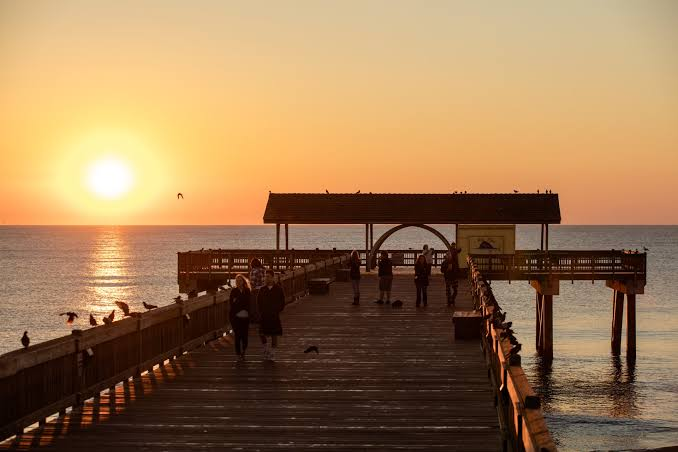
Savannah for a Slow-Paced Southern City Break
Savannah works best as a low-intensity trip built around walking rather than ticketed attractions. Forsyth Park, with its fountain and open lawns, is free and functions as the city’s central outdoor space. The surrounding historic squares extend that same free, walkable structure through most of downtown.
River Street adds a different texture: a cobblestone waterfront lined with shops, galleries, and restaurants, useful for an evening or a rainy-afternoon stretch since much of it is under cover or indoors. City Market, just inland from the river, rounds out a full day of walking without needing a car.
Tybee Island, about 20 minutes from downtown, is worth considering as a coastal add-on day, though winter beach conditions are cooler and less swimmable than in summer, so treat it as a scenic walk rather than a beach day.
Trip length: 2 to 3 days, extended to 3 to 4 if you add Tybee Island.
Best for: couples, photographers, and travelers who want a slower pace than Charleston’s slightly larger historic core.

Aspen for Travelers Who Actually Want Snow
Aspen is a different category from every other destination on this list. It’s not a city break with some winter scenery attached; it’s a snow trip, and it should be evaluated as one.
Skiing and snowboarding at Aspen Mountain and Snowmass are the main draw, and both come with lift tickets, equipment rental if needed, and, often, guided lesson costs on top of lodging. None of these are cheap during the holiday week, which is one of the highest-demand periods of the ski season. If skiing isn’t the plan, downtown Aspen still offers walkable shopping and dining, and scenic gondola rides are sometimes available separately from ski access, though this should be confirmed for the specific dates you’re traveling.
Snowshoeing and winter hiking are lower-cost ways to experience the scenery without a lift ticket, though trail conditions and access vary through the season and should be checked locally.
Cost reality: lodging, lift tickets, and dining in Aspen during this week are consistently among the most expensive in this list. This is a premium snow trip, not a budget winter getaway.
Skip it if: cost is a primary concern, or if you’re not planning to ski, snowboard, or snowshoe. Without snow activities, there isn’t enough in downtown Aspen alone to justify the price for most travelers.
Honolulu and Oahu for a Tropical Winter Escape
Hawaii’s case for this week goes beyond generic warm weather. Winter is humpback whale season in Hawaiian waters, with the season generally running from around December through April, which gives this specific travel window a real, seasonal reason to visit rather than just an escape from the cold. Whale sightings are not guaranteed on any single trip, so treat this as a strong seasonal opportunity rather than a promise.
Waikiki Beach is the obvious anchor for beach time, and it’s free to access, though beachfront parking and many nearby amenities are not. Diamond Head, the volcanic crater near Waikiki, is a paid hiking attraction with panoramic views, and reservations are commonly required for vehicle entry, so this should be booked ahead rather than treated as a walk-up option. Pearl Harbor’s memorial sites include both free and ticketed components, and advance reservations are strongly recommended given how far ahead tickets can sell out.
The North Shore makes a good day trip from Waikiki for a different, less developed coastline, though winter surf conditions there can be rough, which affects swimming safety more than sightseeing.
Trip length: 5 to 7 days, given the flight time most travelers face getting to Oahu.
Best for: travelers prioritizing warm weather and ocean activities who have enough vacation days to justify the travel time.
Québec City for a True Snowy European-Style Winter Experience
Québec City delivers a version of winter that most U.S. destinations on this list can’t: a walkable historic core that looks and feels distinctly different in the cold, without needing a car or a ski pass.
Old Québec and Petit-Champlain form the walkable heart of the trip, with narrow streets and older architecture that hold up well as a winter destination independent of any holiday decorations. Dufferin Terrace, near the Château Frontenac, adds a scenic overlook worth building into an outdoor block of the day. For indoor time, the Musée de la civilisation and the Musée national des beaux-arts du Québec both offer substantial paid exhibits suited to a cold-weather afternoon.
Cold-weather logistics matter more here than in any city break on this list except Aspen. Snow and ice on sidewalks are normal, proper winter footwear is not optional, and it’s worth planning indoor warming stops between outdoor blocks rather than treating the whole day as one continuous walk. Public transit is available, but many of the core sights in Old Québec are close enough together to reach on foot if you’re dressed for it.
Trip length: 3 to 4 days covers the historic core and a couple of museum visits without rushing.
Best for: travelers who want real snow and cold-weather atmosphere but prefer walking a compact city over driving to a mountain resort.
London for a Flexible Indoor and Outdoor City Break
London’s value in this list is really a demonstration of a different kind of trip: one that barely depends on the weather at all.
The British Museum, the National Gallery, the Natural History Museum, and the Victoria and Albert Museum are all major, substantial indoor attractions, and several offer free general admission, with special exhibitions typically ticketed separately. That gives London more free indoor content than any other destination here, which matters if the forecast turns uncooperative for several days in a row.
Outdoors, Hyde Park and the areas around Westminster and the South Bank are free to walk, and Greenwich makes a solid half-day trip by river or rail for a change of scenery from central London. Individual attraction schedules, including English Heritage properties around the country, commonly list separate opening dates for the holiday period rather than one uniform schedule, so any specific site should be checked directly rather than assumed open.
Trip length: 4 to 6 days, especially if a day trip outside central London is part of the plan.
Best for: travelers who want a trip that isn’t weather-dependent, or who are combining a UK visit with other European travel.
Which Destination Fits Your Travel Style?
| Destination | Best for | Weather | Trip length | Car needed? |
|---|---|---|---|---|
| New York City | City break, indoor/outdoor mix | Cold | 3 to 5 days | No |
| Orlando | Families, theme parks | Mild | 4 to 6 days | Helpful |
| San Diego | Outdoor, coastal | Mild | 3 to 4 days | Helpful |
| New Orleans | Culture, walkability | Mild | 3 to 4 days | No |
| Charleston | History, couples | Cool | 2 to 3 days | No |
| Savannah | Slow travel, couples | Cool | 2 to 3 days | No |
| Aspen | Skiing, snow sports | Cold/snow | 3 to 5 days | Helpful |
| Honolulu/Oahu | Tropical, whale season | Warm | 5 to 7 days | Helpful |
| Québec City | Snow, walkable winter | Cold/snow | 3 to 4 days | No |
| London | Indoor/outdoor flexibility | Cold, mild | 4 to 6 days | No |
Best for families
Orlando and San Diego offer the most predictable logistics for kids: clear attraction hours, established stroller and accessibility policies, and less reliance on long, unstructured walking.
Best for couples
Charleston, Savannah, and Québec City all suit a slower-paced trip built around walking and architecture rather than ticketed attractions.
Best for warm weather
Honolulu and Orlando offer the mildest conditions on this list; San Diego, New Orleans, Charleston, and Savannah are cooler but still far more comfortable than a northern winter.
Best for snow
Aspen for skiing and snow sports specifically; Québec City for a walkable, snowy city that doesn’t require ski equipment.
Best for outdoor activities
San Diego’s coastline and Balboa Park, plus Savannah and Charleston’s historic outdoor walking, give the strongest free outdoor content on this list.
Best for museums and indoor sightseeing
London and New York City both offer enough indoor attractions to structure a multi-day trip almost entirely around them if needed.
Best for a short 2 to 3 day trip
Charleston and Savannah both have compact enough centers to see properly in a short window.
Best for a 4 to 5 day vacation
New York City, Orlando, and Québec City all reward a slightly longer stay without requiring a full week.
Best if you are trying to avoid major New Year’s crowds
None of these destinations are truly uncrowded during this window, since it’s a peak U.S. travel period generally. Charleston and Savannah tend to feel less concentrated than major hubs like New York, Orlando, or Aspen, though this isn’t a guarantee of low crowds, just a comparative difference.
What Is Actually Open Between Christmas and New Year?
Why December 26 is not the same as December 25
Many travelers assume that if a destination is open during the Christmas season generally, it will be open on every day of the week that follows. That’s not reliable. Individual attractions, museums, and public spaces frequently publish separate schedules for December 26 through January 1, and some close for one or two of those days even while operating normally on the others.
Attractions that normally operate through the holiday week
Major theme parks, most museums, and public outdoor spaces like Central Park, Balboa Park, and Forsyth Park typically remain open through this period, since it’s one of their busiest weeks of the year. That said, “typically open” is not the same as guaranteed for a specific date.
Places that may have reduced holiday hours
Individual historic house museums, some smaller attractions, and city-run spaces sometimes shift their hours during this week. English Heritage properties, for example, publish separate holiday opening dates by site rather than one blanket schedule, which is a useful reminder that even within one organization, individual locations can differ.
Attractions that require advance reservations
Diamond Head on Oahu, Pearl Harbor’s memorial sites, and many theme park entries now require timed reservations rather than walk-up access, particularly during high-demand weeks. Skating rinks in New York and popular museum exhibitions can also sell out specific time slots.
How to verify holiday hours before leaving
Check the official website of each specific attraction, not a general destination guide, within a week or two of travel, and again a day or two before if the destination has weather-dependent conditions like Aspen or Québec City.

How to Plan a Trip Between Christmas and New Year
- Book hotels early. This window is one of the highest-demand travel periods of the year in the U.S., and prices rise accordingly the closer you get to the date.
- Expect holiday pricing to shape your destination choice. If cost matters more than the specific city, that alone may point you toward Charleston, Savannah, or New Orleans over New York or Aspen.
- Plan around possible closures rather than assuming normal hours. Build one flexible, low-cost day into any itinerary in case a planned attraction has reduced hours.
- Check weather and road conditions, especially for Aspen and Québec City, where snow can affect both driving and walking plans day to day.
- Decide on rental car versus public transit early. New York, New Orleans, Charleston, Savannah, and London are all workable without a car. Orlando, San Diego, Aspen, and Honolulu are considerably easier with one.
- Match your trip length to the destination. Compact historic cities like Charleston and Savannah don’t need a full week; attraction-dense or long-haul destinations like Orlando and Honolulu generally do.
- Reserve timed-entry attractions before arrival, including theme park days, Diamond Head, Pearl Harbor, and any museum exhibitions you specifically want to see, since holiday-week demand fills these faster than an average week.
Free Versus Paid: What Each Destination Actually Offers
| Destination | Strong free option | Main paid draw |
|---|---|---|
| New York City | Central Park, neighborhood walks | Museums, skating rinks, observation decks |
| Orlando | Winter Park, Lake Eola | Theme parks |
| San Diego | Balboa Park grounds, La Jolla coastline | San Diego Zoo, in-park museums |
| New Orleans | French Quarter, Garden District | River cruises, guided tours |
| Charleston | Historic downtown, Waterfront Park | Historic house museums |
| Savannah | Forsyth Park, historic squares | Museums, guided tours |
| Aspen | Downtown walking | Lift tickets, equipment rental |
| Honolulu/Oahu | Waikiki Beach access | Diamond Head, Pearl Harbor tours |
| Québec City | Old Québec streets, Dufferin Terrace | Museums |
| London | Major museum general admission, parks | Special exhibitions, Tower of London |
Free access to a park or neighborhood doesn’t make a destination cheap overall. Lodging, food, and transportation during this specific week can outweigh any savings from free sightseeing, particularly in New York, Aspen, and Honolulu.
Frequently Asked Questions
Where is the best place to travel between Christmas and New Year?
There isn’t one universal answer. It depends on whether you want warm weather, snow, a museum-heavy city trip, or a family-friendly destination with predictable attraction logistics. Use the traveler-style breakdown above to narrow it down before picking a city.
What are the best warm places to visit after Christmas?
Honolulu and Orlando offer the mildest conditions on this list. San Diego, New Orleans, Charleston, and Savannah are cooler but still considerably more comfortable than a northern winter.
Where can I go for snow between Christmas and New Year?
Aspen is the strongest choice for skiing and snow sports specifically. Québec City offers real snow and cold-weather atmosphere in a walkable city setting without requiring ski equipment.
Are attractions open between Christmas and New Year?
Most major attractions operate through this week, since it’s typically one of their busiest periods. However, individual sites often set their own holiday schedules, and some close or reduce hours on specific days, so it’s worth checking each attraction directly rather than assuming standard hours apply.
Is it expensive to travel between Christmas and New Year?
Generally yes. This is one of the highest-demand travel windows of the year in the U.S., which pushes up lodging and flight prices across most destinations. Costs vary significantly by city, with Aspen and Honolulu tending toward the higher end and Charleston, Savannah, and New Orleans generally more moderate.
What are the best family destinations after Christmas?
Orlando and San Diego are the strongest fits for families because of their attraction density and more predictable logistics around parking, tickets, and accessibility. New York City can also work well for families who want a mix of museums and outdoor time.
Where can I travel without renting a car?
New York City, New Orleans, Charleston, Savannah, Québec City, and London are all workable without a car, since their main sights sit within walking distance or are connected by public transit.
How far in advance should I book a Christmas-to-New-Year trip?
Given how high demand runs during this window, booking hotels and flights several weeks to a couple of months ahead is generally safer than waiting, and any timed-entry attractions, like Diamond Head or specific theme park days, should be reserved as soon as your dates are set.
Making the Call
If you’re still deciding, work backward from the trip you actually want rather than the destination’s reputation. A warm-weather trip points toward Orlando, San Diego, or Honolulu depending on budget and flight time. A snow trip points toward Aspen or Québec City depending on whether skiing is part of the plan. A city break that doesn’t depend on the weather points toward New York or London. And a slower, walkable, historic trip points toward Charleston or Savannah. Confirm the specific attractions you care about are open on your actual travel dates, and book the high-demand pieces early, since this week fills up faster than most of the calendar.
Leave a Reply
You must be logged in to post a comment.