
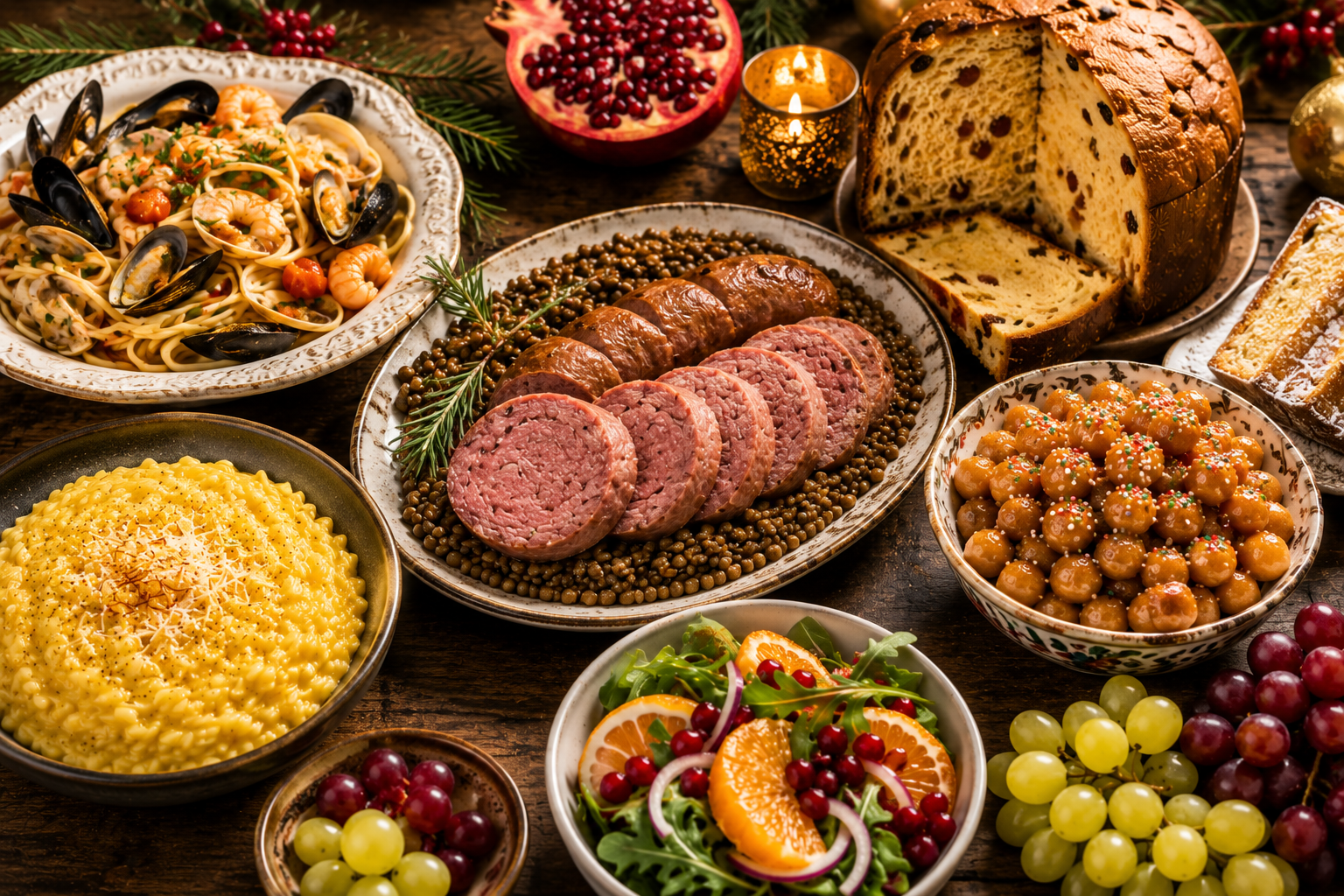
Italian New Year’s food centers on cotechino or zampone served with lentils, a dish strongly associated with Emilia-Romagna and especially Modena, where lentils are traditionally believed to resemble coins and symbolize financial luck for the year ahead, while the pork sausage represents abundance. This is far from the only tradition, though. In Naples and much of Campania, the New Year’s Eve meal, called the Cenone di San Silvestro, often centers on seafood instead, and eating twelve grapes at midnight is a specifically Neapolitan custom tied to the twelve months of the coming year.
Parts of northern Italy favor risotto as part of the meal, pomegranate appears at multiple regional tables as a symbol of abundance and fertility, and the holiday closes with panettone or pandoro. No single menu represents all of Italy. What follows covers the food, the symbolism behind it, and where each tradition actually comes from, along with eight complete recipes.
Quick Answer: What Do Italians Eat for New Year’s?
A short list of the foods most associated with Italian New Year’s, with where each one comes from and why.
- Cotechino or zampone with lentils: an Emilia-Romagna tradition, especially around Modena, where the pork stands for abundance and the lentils for prosperity.
- Seafood: central to the Cenone di San Silvestro (New Year’s Eve dinner) in Naples and much of southern Italy, where dishes built around fish and shellfish often replace or accompany meat.
- Twelve grapes at midnight: a Neapolitan custom, with one grape eaten for each of the twelve months of the year ahead.
- Pomegranate: served in Tuscany, Naples, and other regions as a symbol of abundance and fertility.
- Risotto: part of some northern Italian New Year’s menus, often built around saffron or other rich additions for a festive dish.
- Panettone and pandoro: the two dominant Italian holiday cakes, eaten throughout the country from Christmas through New Year’s, with panettone associated with Milan and pandoro with Verona.
Italian New Year’s Food by Region, at a Glance
Regional differences matter more in Italian New Year’s food than in many other countries, since Italy’s culinary identity is built around distinct regional traditions rather than one national cuisine.
| Region | Signature Dish | Symbolizes | Typical Course |
| Emilia-Romagna (Modena) | Cotechino or zampone with lentils | Abundance (pork), prosperity (lentils) | Secondo (main course) |
| Campania (Naples) | Seafood Cenone, twelve grapes at midnight | Twelve months of luck (grapes) | Multiple courses, plus midnight ritual |
| Tuscany | Lentils, cotechino, grapes, pomegranate | Prosperity, abundance, fertility | Secondo and contorno (side) |
| Northern Italy (Lombardy and nearby) | Risotto, often saffron-based | Festive richness rather than specific luck symbolism | Primo (first course) |
| Southern Italy broadly | Seafood-forward Cenone dishes | Varies by coastal tradition | Antipasto and primo |
| Nationwide | Panettone (Milan) or pandoro (Verona) | Celebration, not luck-specific | Dolce (dessert) |
Note: These are regional tendencies, not fixed rules. Many Italian families mix traditions, skip some entirely, or follow customs specific to their own town rather than their broader region.
Why Lentils and Pork Are Considered Lucky
The symbolism behind Italian New Year’s food is cultural belief, not a scientific claim about what any food can do. Here’s what each tradition is actually built on.
Lentils: Coins and Prosperity
Lentils are traditionally associated with money in Italian New Year’s custom because their small, round, flattened shape resembles coins. Eating them on New Year’s Eve or New Year’s Day is traditionally believed to encourage financial prosperity in the year ahead. This belief is widespread across central and northern Italy and is one of the most consistently cited pieces of Italian New Year’s food symbolism.
Cotechino and Zampone: Abundance
Cotechino and zampone are both pork sausages associated with abundance, tied to the richness of the meat and the tradition of using the whole animal, historically a sign of a household that wouldn’t go hungry. Cotechino is a fresh pork sausage stuffed into a casing, most closely associated with Modena and the surrounding Emilia-Romagna region. Zampone is a related preparation where a similar spiced pork mixture is stuffed into a boned pig’s trotter rather than a standard casing, also rooted in Modena tradition. The two are often treated as interchangeable at the New Year’s table, both served with lentils, though zampone is generally considered the more elaborate, traditional version.
Grapes in Naples: Twelve Months of Luck
In Naples, eating twelve grapes at midnight, one for each month of the coming year, is a specifically Neapolitan New Year’s custom. It is not practiced uniformly across Italy, and framing it as a nationwide habit would misrepresent how regional Italian food culture actually works. The custom sits alongside, and is sometimes confused with, similar midnight grape traditions in Spain and parts of Latin America, which developed independently.
Pomegranate: Fertility and Abundance
Pomegranate appears at New Year’s tables in Tuscany, Naples, and other regions as a symbol of abundance and fertility, tied to the fruit’s many seeds. It’s typically served simply, in segments or scattered as seeds over a dish, rather than prepared as an elaborate course on its own.
Red and Gold: General Good Fortune
Beyond specific foods, red is associated with good fortune in Italian New Year’s custom, most visibly in the tradition of wearing red underwear on New Year’s Eve for luck in the year ahead. This is a clothing custom rather than a food one, but it reflects the same general association between the color red and good fortune that shows up around the New Year’s table in items like pomegranate seeds and red wine.
Cenone di San Silvestro: The Italian New Year’s Eve Dinner
The main Italian New Year’s meal is called the Cenone di San Silvestro, literally the Saint Sylvester’s Eve big dinner, eaten on the night of December 31. It follows the structure of a substantial Italian meal: an antipasto (starter), a primo (first course, often a pasta, soup, or risotto), a secondo (main course, frequently the cotechino or zampone with lentils, or a seafood dish in southern regions), a contorno (side dish), and a dolce (dessert), typically panettone or pandoro. Capodanno refers to New Year’s Day itself, January 1, which is generally a quieter, more low-key food day built around leftovers or a simple family lunch rather than a second elaborate meal.
Note: The Cenone di San Silvestro is a New Year’s Eve tradition, eaten on December 31, distinct from Capodanno, New Year’s Day itself. This is separate from Lunar New Year, which is celebrated on a different calendar entirely in China, Vietnam, and other countries and has no connection to Italian New Year’s customs.
Regional Differences in Italian New Year’s Food
Italian food culture is organized by region and even by city, and New Year’s traditions follow the same pattern.
Emilia-Romagna and Modena
Modena is the epicenter of the cotechino and zampone tradition, both served with lentils as the centerpiece of the Cenone’s secondo course. This pairing is widely recognized across Italy as a New Year’s classic, even in regions where it isn’t the dominant local custom, largely because Emilia-Romagna’s food culture has strong national visibility.
Naples and Campania
Naples brings two distinct customs to the table: a seafood-centered Cenone, often including dishes built around fish, shellfish, or baccala (salt cod), and the midnight tradition of eating twelve grapes. Pomegranate also appears on many Neapolitan tables. Meat dishes like cotechino are less central here than in Emilia-Romagna, reflecting the broader Southern Italian preference for seafood on major holiday occasions.
Tuscany
Tuscan New Year’s tables often include lentils, sometimes paired with cotechino, alongside grapes and pomegranate, drawing on several of the same symbols found elsewhere in central Italy without being identical to the Modena or Naples versions of the tradition.
Northern Italy
In parts of northern Italy, particularly areas influenced by Lombard food culture, risotto shows up as part of the New Year’s meal, often dressed up with saffron or other festive ingredients for the occasion. This isn’t a luck-symbolism dish in the way lentils or grapes are; it reflects the region’s broader culinary identity, where rice dishes play a bigger role than in most of the rest of Italy.
Southern Italy Broadly
Beyond Naples specifically, much of coastal southern Italy leans toward seafood for New Year’s Eve, consistent with the region’s Mediterranean coastal food culture and its historical connection to Catholic fasting customs that favored fish over meat on certain holiday eves.
The Recipes
Eight complete recipes covering the major Italian New Year’s traditions described above. These are original, home-cook-friendly preparations inspired by traditional Italian New Year’s dishes, not copies of any published recipe, and several are explicitly noted as adaptations rather than strict regional originals.
1. Cotechino with Lentils
The classic Modena-style New Year’s secondo: a fresh pork cotechino sausage simmered until tender and served over stewed lentils. This recipe uses a precooked, vacuum-sealed cotechino, the most common form sold outside Italy, since raw fresh cotechino requires a much longer simmer and isn’t widely available in most home kitchens.
| PREP | COOK | TOTAL | SERVINGS |
| 15 min | 40 min | 55 min | 6 |
Note: Cotechino is sold both fresh (raw) and precooked (vacuum-sealed). Cook times differ significantly between the two. Always follow the package instructions for your specific product, since exact timing varies by brand and weight; the instructions below assume a standard precooked, vacuum-sealed cotechino.
Ingredients:
- 1 precooked, vacuum-sealed cotechino sausage (about 1 lb), per package instructions
- 2 cups dried brown lentils, rinsed
- 2 tablespoons olive oil
- 1 small yellow onion, finely diced
- 1 carrot, finely diced
- 1 celery stalk, finely diced
- 2 cloves garlic, minced
- 4 cups vegetable or chicken broth
- 1 bay leaf
- Salt and black pepper to taste
Instructions:
- Cook the cotechino according to the package instructions, typically simmered in its sealed pouch in a pot of gently boiling water for about 30 to 40 minutes. Do not pierce the casing before cooking.
- While the cotechino cooks, heat the olive oil in a saucepan over medium heat. Add the onion, carrot, and celery, and cook until softened, about 6 minutes.
- Add the garlic and cook 30 seconds, then stir in the lentils, broth, and bay leaf. Bring to a simmer.
- Cover partially and cook for 25 to 30 minutes, until the lentils are tender but still hold their shape. Remove the bay leaf and season with salt and pepper.
- Remove the cotechino from its pouch, slice into rounds about 3/4 inch thick, and arrange over the lentils to serve.
Doneness and food safety: if using a precooked product, it only needs reheating to a safe serving temperature, generally at least 140°F (60°C) throughout. If using raw fresh cotechino, USDA guidance for whole cuts of pork requires a minimum internal temperature of 145°F (63°C) with a 3-minute rest, though fresh cotechino traditionally simmers far longer, often 3 to 4 hours, to become tender; follow the specific product’s instructions.
Substitutions: a good-quality pork and garlic sausage can stand in if cotechino isn’t available, though the flavor and texture will differ. Canned lentils (three 15-oz cans, drained and rinsed) can replace dried lentils; add them in the last 10 minutes instead of simmering for 30.
Storage and reheating: refrigerate leftover cotechino and lentils separately for up to 3 days. Reheat the lentils on the stovetop over low heat, and warm sliced cotechino gently in a covered skillet with a splash of water or broth to keep it from drying out.
Make-ahead: the lentils can be fully cooked up to 2 days ahead and reheated. The cotechino is best cooked the day it’s served, following the package’s timing.
Nutrition estimate per serving: about 450 calories, 22 g protein, 30 g carbs, 27 g fat, 10 g saturated fat, 850 mg sodium, 8 g fiber. Cotechino is a cured, seasoned product and tends to run high in sodium; values vary by brand.
2. Zampone with Lentils
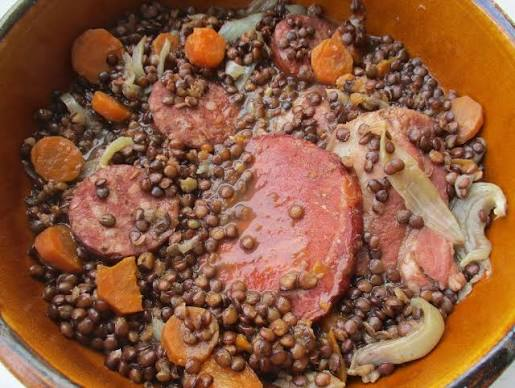
Zampone uses the same seasoned pork filling as cotechino, stuffed into a boned pig’s trotter instead of a standard casing, giving it a different shape and a slightly richer reputation at the Modena table. This recipe uses the same lentil base as the cotechino recipe above, since the two are traditionally served the same way.
| PREP | COOK | TOTAL | SERVINGS |
| 15 min | 45 min | 1 hr | 6 |
Note: Like cotechino, zampone is sold both fresh and precooked, and cook times vary by product and weight. Always follow the specific package instructions rather than a fixed time.
Ingredients:
- 1 precooked, vacuum-sealed zampone (about 2 lbs), per package instructions
- 2 cups dried brown lentils, rinsed
- 2 tablespoons olive oil
- 1 small yellow onion, finely diced
- 1 carrot, finely diced
- 1 celery stalk, finely diced
- 2 cloves garlic, minced
- 4 cups vegetable or chicken broth
- 1 bay leaf
- Salt and black pepper to taste
Instructions:
- Cook the zampone according to the package instructions, typically simmered in its sealed pouch in gently boiling water for about 40 to 45 minutes given its larger size compared to cotechino. Do not pierce the casing before cooking.
- Prepare the lentils exactly as in the cotechino recipe above: soften the onion, carrot, and celery in olive oil, add garlic, then the lentils, broth, and bay leaf, and simmer 25 to 30 minutes until tender.
- Remove the zampone from its pouch and slice into rounds about 1 inch thick.
- Arrange the slices over the lentils to serve, plating a slightly larger portion per person than the cotechino version given the trotter’s shape yields fewer, thicker slices.
Doneness and food safety: the same guidance applies as for cotechino: precooked products need only reheating to a safe serving temperature, while raw fresh zampone needs extended simmering, generally longer than cotechino given its larger size, until fully tender. Follow the package for product-specific timing.
Substitutions: cotechino can replace zampone directly, using the shorter cotechino cook time instead. This swap is common even in Italian households when zampone isn’t available.
Storage and reheating: refrigerate leftovers separately for up to 3 days. Reheat sliced zampone gently in a covered skillet with a little broth, and warm the lentils on the stovetop.
Make-ahead: the lentils can be made up to 2 days ahead. Cook the zampone fresh on the day of serving, following its package timing.
Nutrition estimate per serving: about 470 calories, 23 g protein, 30 g carbs, 29 g fat, 11 g saturated fat, 900 mg sodium, 8 g fiber. As with cotechino, sodium runs high and varies by brand.
3. Zuppa di Lenticchie (Vegetarian Italian Lentil Stew)
A meat-free lentil stew that keeps the coin symbolism of the traditional pairing without the pork, useful for a vegetarian guest or a lighter version of the New Year’s meal. This is an original, simplified preparation inspired by Italian lentil soup traditions, not a copy of a specific regional formula.
| PREP | COOK | TOTAL | SERVINGS |
| 15 min | 35 min | 50 min | 6 |
Ingredients:
- 3 tablespoons olive oil
- 1 yellow onion, diced
- 2 carrots, diced
- 2 celery stalks, diced
- 3 cloves garlic, minced
- 2 cups dried brown or green lentils, rinsed
- 1 14-oz can diced tomatoes
- 6 cups vegetable broth
- 1 sprig fresh rosemary (or 1/2 teaspoon dried)
- 1 bay leaf
- Salt and black pepper to taste
- Extra-virgin olive oil, for finishing
Instructions:
- Heat the olive oil in a large pot over medium heat. Add the onion, carrots, and celery, and cook until softened, about 6 minutes.
- Add the garlic and cook 30 seconds, then stir in the lentils, tomatoes, broth, rosemary, and bay leaf.
- Bring to a boil, then reduce to a simmer. Cover partially and cook for 25 to 30 minutes, until the lentils are tender.
- Remove the rosemary sprig and bay leaf. Season with salt and pepper, and finish each bowl with a drizzle of good olive oil.
Doneness: the lentils are done when tender but still holding their shape. This dish has no meat, dairy, or eggs, so there’s no minimum safe temperature beyond serving it hot.
Substitutions: a small piece of Parmesan rind added while simmering (removed before serving) adds savory depth for those who eat dairy. Kale or spinach can be stirred in during the last 5 minutes for extra greens.
Storage and reheating: refrigerate for up to 5 days, or freeze for up to 3 months. Reheat on the stovetop over low heat, thinning with broth or water as needed since it thickens as it sits.
Make-ahead: this stew is genuinely better the next day and can be made up to 2 days ahead.
Nutrition estimate per serving: about 320 calories, 16 g protein, 48 g carbs, 7 g fat, 1 g saturated fat, 480 mg sodium, 14 g fiber.
4. Linguine allo Scoglio (Southern Italian Seafood Pasta)
A seafood pasta in the style of southern Italian Cenone traditions, built around mussels, clams, and shrimp in a light garlic and white wine sauce. This is an adaptation for the home cook, not a claim to any single family’s or restaurant’s exact recipe.
| PREP | COOK | TOTAL | SERVINGS |
| 20 min | 20 min | 40 min | 4 |
Ingredients:
- 12 oz linguine
- 2 tablespoons olive oil, plus more for serving
- 4 cloves garlic, thinly sliced
- 1/2 teaspoon red pepper flakes
- 1 lb mussels, scrubbed and debearded
- 1 lb littleneck clams, scrubbed
- 1/2 lb large shrimp, peeled and deveined
- 3/4 cup dry white wine
- 1 cup cherry tomatoes, halved
- 1/4 cup chopped fresh parsley
- Salt and black pepper to taste
Instructions:
- Cook the linguine in salted boiling water until just shy of al dente, about 2 minutes less than the package instructions. Reserve 1 cup of pasta water before draining.
- While the pasta cooks, heat the olive oil in a large, deep skillet over medium heat. Add the garlic and red pepper flakes and cook until fragrant, about 1 minute.
- Add the mussels and clams, then pour in the white wine. Cover and cook for 5 to 7 minutes, until the shells open, discarding any that stay closed.
- Add the shrimp and cherry tomatoes, and cook uncovered for 2 to 3 minutes, until the shrimp turn pink and opaque.
- Add the drained pasta to the skillet along with a splash of the reserved pasta water, tossing to coat and loosen the sauce. Finish with parsley, salt, and pepper.
Doneness and food safety: shrimp are done when they turn pink and opaque throughout, reaching an internal temperature of about 145°F (63°C). Mussels and clams should open fully during cooking; discard any that remain closed after cooking, since an unopened shell can mean the shellfish was already dead before cooking and isn’t safe to eat.
Substitutions: if mussels or clams aren’t available, increase the shrimp to 1 lb total and add 8 oz of bay scallops for variety. A seafood stock can replace some of the wine for a non-alcoholic version.
Storage and reheating: seafood pasta is best eaten fresh. If needed, refrigerate for up to 1 day only, and reheat gently in a covered skillet with a splash of water, since shellfish toughens quickly with reheating.
Make-ahead: scrub the shellfish and prep the garlic, tomatoes, and parsley up to a few hours ahead and refrigerate. Cook the dish itself just before serving.
Nutrition estimate per serving: about 480 calories, 28 g protein, 58 g carbs, 14 g fat, 2 g saturated fat, 620 mg sodium.
5. Saffron Risotto (Northern Italian-Inspired)
A rich, golden risotto in the style of northern Italian saffron rice dishes, dressed up for a festive New Year’s table. This is inspired by the region’s broader risotto tradition rather than a specific claimed family recipe.
| PREP | COOK | TOTAL | SERVINGS |
| 10 min | 30 min | 40 min | 4 |
Ingredients:
- 5 cups chicken or vegetable broth, kept warm
- 1/4 teaspoon saffron threads
- 3 tablespoons unsalted butter, divided
- 1 small yellow onion, finely diced
- 1 1/2 cups Arborio rice
- 1/2 cup dry white wine
- 1/2 cup grated Parmesan, plus more for serving
- Salt and black pepper to taste
Instructions:
- Steep the saffron threads in about 1/4 cup of the warm broth for 10 minutes to release their color and flavor.
- Melt 2 tablespoons of the butter in a wide, heavy pot over medium heat. Add the onion and cook until soft and translucent, about 5 minutes.
- Add the rice and stir for 1 to 2 minutes, until the edges look slightly translucent.
- Pour in the wine and stir until mostly absorbed. Begin adding the warm broth one ladle at a time, stirring frequently and waiting until each addition is mostly absorbed before adding the next.
- After about 15 minutes, stir in the saffron broth. Continue adding broth and stirring for another 3 to 5 minutes, until the rice is creamy and tender with a slight bite in the center, about 18 to 20 minutes total cooking time.
- Remove from heat and stir in the remaining tablespoon of butter and the Parmesan. Season with salt and pepper and serve immediately.
Doneness: the rice should be creamy and just tender, with a very slight firmness in the center, not soft all the way through or chalky and hard. Risotto continues to thicken off the heat, so it should look slightly looser than the final texture you want when you pull it from the stove.
Substitutions: Carnaroli rice can replace Arborio for an even creamier result. Vegetable broth keeps this vegetarian; a small pinch of turmeric can approximate the color if saffron isn’t available, though the flavor will differ.
Storage and reheating: risotto is best served fresh, since the texture changes significantly on standing. Leftovers keep refrigerated for up to 2 days and reheat well with a splash of broth over low heat, or can be pressed into patties and pan-fried the next day.
Make-ahead: the broth can be warmed and the onion prepped ahead, but risotto itself should be cooked just before serving for the best texture.
Nutrition estimate per serving: about 420 calories, 10 g protein, 58 g carbs, 15 g fat, 8 g saturated fat, 520 mg sodium.
6. Pomegranate and Citrus Salad
A simple, bright salad built around pomegranate seeds and citrus, reflecting the fruit’s place at Tuscan and Neapolitan New Year’s tables as a symbol of abundance and fertility. This is a straightforward preparation meant to highlight the fruit rather than a specific named regional dish.
| PREP | COOK | TOTAL | SERVINGS |
| 15 min | 0 min | 15 min | 4 |
Ingredients:
- 1 pomegranate, seeds removed (about 1 cup)
- 2 blood oranges or navel oranges, peeled and sliced into rounds
- 2 cups arugula or mixed greens
- 1/4 cup thinly sliced red onion
- 2 tablespoons extra-virgin olive oil
- 1 tablespoon fresh lemon juice
- 1/2 teaspoon honey
- Salt and black pepper to taste
- 2 tablespoons crumbled ricotta salata or feta (optional)
Instructions:
- Arrange the arugula on a platter or individual plates. Layer the orange slices and red onion over the greens.
- Scatter the pomegranate seeds evenly over the top.
- Whisk the olive oil, lemon juice, and honey together with a pinch of salt and pepper.
- Drizzle the dressing over the salad and finish with the cheese, if using.
Doneness: this is a raw, assembled dish with no cooking involved.
Substitutions: fennel, thinly sliced, is a common addition alongside or instead of the red onion. Any citrus works if blood oranges aren’t in season.
Storage: best assembled just before serving, since the greens wilt and the citrus releases liquid over time. Pomegranate seeds can be removed up to 2 days ahead and refrigerated in an airtight container.
Make-ahead: seed the pomegranate and slice the citrus up to a day ahead and refrigerate separately; assemble just before serving.
Nutrition estimate per serving: about 180 calories, 3 g protein, 24 g carbs, 9 g fat, 1 g saturated fat, 60 mg sodium, 4 g fiber.

7. Mascarpone and Berry Panettone Trifle
A simple way to serve leftover or fresh panettone beyond slicing it plain, layered with sweetened mascarpone and berries. Pandoro works just as well in this preparation and is a common substitution in northern Italy, where pandoro is more traditional than panettone.
| PREP | COOK | TOTAL | SERVINGS |
| 20 min | 0 min | 20 min plus 1 hr chilling | 6 |
Ingredients:
- 1 lb panettone or pandoro, cut into 1-inch cubes
- 1 cup mascarpone cheese
- 1 cup heavy cream
- 1/3 cup powdered sugar
- 1 teaspoon vanilla extract
- 2 cups mixed berries (fresh or thawed frozen)
- 2 tablespoons orange liqueur or orange juice, for brushing (optional)
Instructions:
- In a bowl, whisk the mascarpone, heavy cream, powdered sugar, and vanilla together until it holds soft peaks, about 2 minutes with a hand mixer or 4 to 5 minutes by hand.
- If using, lightly brush the panettone cubes with the orange liqueur or juice.
- In individual glasses or a large trifle bowl, layer panettone cubes, a spoonful of the mascarpone cream, and a scattering of berries. Repeat the layers, ending with cream and berries on top.
- Refrigerate for at least 1 hour before serving to let the layers set slightly.
Doneness: no cooking is involved; this dish is ready once assembled and chilled.
Substitutions: whipped cream cheese thinned with a little cream can replace mascarpone. Any combination of berries or a citrus compote works in place of the mixed berries.
Storage: refrigerate assembled trifle for up to 2 days, though the panettone will soften further the longer it sits. This dish is not suitable for freezing.
Make-ahead: the mascarpone cream can be made up to 1 day ahead and refrigerated. Assemble the full trifle up to a few hours before serving for the best texture contrast.
Nutrition estimate per serving: about 410 calories, 7 g protein, 46 g carbs, 21 g fat, 11 g saturated fat, 190 mg sodium.
8. Struffoli (Neapolitan Honey Fritters)
Small fried dough balls coated in warm honey, a Neapolitan holiday sweet traditionally more associated with Christmas through New Year’s than with New Year’s specifically, included here as the regional sweet option for a Naples-inspired menu. This is a simplified home-cook version, not a claim to a single authentic family formula, since struffoli recipes vary by household.
| PREP | COOK | TOTAL | SERVINGS |
| 30 min | 20 min | 50 min | 8 |
Ingredients:
- 2 cups all-purpose flour
- 3 large eggs
- 2 tablespoons sugar
- 1 tablespoon unsalted butter, melted and cooled
- Zest of 1 lemon
- 1/4 teaspoon salt
- Vegetable oil, for frying (about 4 cups)
- 1 cup honey
- Colored sprinkles and candied citrus peel, for garnish (optional)
Instructions:
- In a bowl, whisk the eggs, sugar, melted butter, and lemon zest together. Add the flour and salt and mix until a soft, slightly sticky dough forms. Knead briefly on a floured surface until smooth, about 2 minutes.
- Roll the dough into ropes about 1/2 inch thick, then cut into 1/2-inch pieces. Roll each piece into a small ball.
- Heat the oil in a deep pot to 350°F (175°C). Fry the dough balls in batches, about 2 to 3 minutes each, until golden brown, turning as needed for even color. Drain on paper towels.
- Warm the honey in a large skillet over low heat until it thins and becomes fragrant, about 2 minutes. Add the fried dough balls and toss gently to coat completely.
- Mound the honey-coated struffoli onto a serving plate in a ring or pile shape, and scatter with sprinkles or candied citrus peel while the honey is still warm and tacky.
Doneness and food safety: the dough balls are done when deeply golden brown and cooked through, which happens quickly given their small size; cut one open if unsure, since the inside should look fully set, not doughy. Keep the frying oil at a steady 350°F (175°C) using a deep-fry or candy thermometer, since oil that’s too cool leads to greasy, undercooked results, and oil that’s too hot burns the outside before the inside cooks.
Substitutions: orange zest can replace or join the lemon zest. Store-bought honey works fine; a mild variety keeps the citrus and dough flavor from being overpowered.
Storage: struffoli keeps at room temperature, loosely covered, for up to 3 days, though the fried dough will soften as it absorbs the honey over time. Not recommended for freezing once assembled.
Make-ahead: the dough balls can be fried up to 1 day ahead and stored uncoated in an airtight container; toss with warm honey and garnish just before serving for the best texture.
Nutrition estimate per serving: about 320 calories, 6 g protein, 42 g carbs, 14 g fat, 3 g saturated fat, 90 mg sodium, based on 8 servings from the full batch.
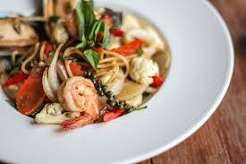
Serving the Midnight Grapes
The Neapolitan custom of eating twelve grapes at midnight doesn’t need a recipe, just a bit of planning. Seedless grapes make the tradition easier to complete before the clock finishes striking twelve; rinse and portion twelve grapes per person into small bowls or glasses ahead of time so everyone can start eating right at midnight without fumbling with a fruit bowl. This custom is specific to Naples and isn’t practiced the same way, or at all, throughout the rest of Italy.
Four Regional Italian New Year’s Menus
Each menu draws only from the recipes above, matched to a specific regional angle.
Northern Italian-Inspired Menu
Pomegranate and Citrus Salad to start, Saffron Risotto as the centerpiece, and the Mascarpone and Berry Panettone Trifle (made with pandoro, the more northern-associated cake) to close. This menu leans on the region’s rice tradition rather than the Modena pork-and-lentil pairing.
Southern Italian / Naples Seafood Menu
Pomegranate and Citrus Salad to start, Linguine allo Scoglio as the primo, and Struffoli to close, with twelve grapes portioned out for midnight. This menu follows the Naples pattern of a seafood-forward Cenone rather than the pork-based tradition found further north.
Vegetarian Italian New Year’s Menu
Pomegranate and Citrus Salad to start, Zuppa di Lenticchie as the main course, and the Mascarpone and Berry Panettone Trifle to close. This keeps the lentil symbolism of the traditional meal while removing the pork entirely.
Easy Home-Cook Italian Menu
Cotechino with Lentils as the single main dish, using a precooked cotechino to keep active cooking time low, followed by store-bought or simply sliced panettone for dessert. This is the lowest-effort version of the traditional meal, built for a home cook who wants the classic pairing without a multi-course spread.
Make-Ahead Timeline
A general schedule for spreading the work across the days before December 31, using the recipes above as examples.
- Up to 2 days ahead: cook the Zuppa di Lenticchie or the lentils for the cotechino and zampone recipes in full; both reheat well.
- Up to 1 day ahead: seed the pomegranate and prep citrus for the salad, refrigerated separately. Make the mascarpone cream for the trifle. Fry the struffoli dough balls, storing them uncoated until ready to coat in honey.
- The morning of: scrub shellfish for the seafood pasta and refrigerate covered. Warm the broth for the risotto so it’s ready to go later without a delay.
- Right before serving: cook the risotto and the seafood pasta fresh, since both lose quality quickly on standing. Reheat cotechino or zampone gently and assemble the pomegranate salad just before it goes to the table.
General Storage and Food Safety
Refrigerate leftovers within 2 hours of cooking, consistent with general USDA food-safety guidance, in shallow airtight containers so they cool quickly. Most cooked dishes in this guide keep for 3 to 5 days refrigerated, with seafood pasta as the clear exception at just 1 day given how quickly shellfish toughens and how much more perishable seafood is compared to meat or legumes. When reheating, bring food to an internal temperature of at least 165°F (74°C), and never leave cooked shellfish, pork, or dairy-based dishes like the panettone trifle sitting at room temperature for more than 2 hours.
Frequently Asked Questions
What is the most traditional Italian New Year’s food?
There isn’t one single answer, since Italian New Year’s food varies significantly by region. Cotechino or zampone with lentils is the dish most widely recognized nationally, strongly associated with Modena and Emilia-Romagna, but it isn’t the dominant tradition everywhere, particularly in Naples and much of southern Italy, where seafood plays a bigger role.
Why are lentils eaten on Italian New Year’s?
Lentils are traditionally associated with money because their small, round, coin-like shape is linked to financial prosperity. Eating them on New Year’s Eve or New Year’s Day is traditionally believed to encourage good fortune for the year ahead, though this is a cultural belief rather than a guaranteed outcome.
What’s the difference between cotechino and zampone?
Both use a similar seasoned pork filling. Cotechino is stuffed into a standard sausage casing, while zampone is stuffed into a boned pig’s trotter, giving it a different shape and a generally larger size. Both are Modena specialties traditionally served with lentils, and they’re often treated as interchangeable at the table.
Do all Italians eat the same food on New Year’s Eve?
No. Italian New Year’s food is strongly regional. Emilia-Romagna centers on cotechino or zampone with lentils, Naples leans toward seafood and the twelve-grape midnight tradition, and other regions add their own variations, like risotto in parts of the north or pomegranate in Tuscany. No single menu represents the whole country.
What is the Cenone di San Silvestro?
It’s the name for the main Italian New Year’s Eve dinner, eaten on the night of December 31 and typically structured as a multi-course meal with an antipasto, primo, secondo, contorno, and dolce. It’s distinct from Capodanno, which refers to New Year’s Day itself, a generally quieter food day.
Why do Neapolitans eat twelve grapes at midnight?
In Naples, eating one grape for each of the twelve months of the coming year at the stroke of midnight is a specifically local tradition, tied to wishing for good luck across the full year ahead. It isn’t practiced the same way throughout the rest of Italy.
What Italian dessert is eaten for New Year’s?
Panettone and pandoro are the two dominant choices, eaten throughout Italy from Christmas through New Year’s rather than as a New Year’s-specific dessert. Panettone is associated with Milan and pandoro with Verona. Regional sweets like Neapolitan struffoli also appear on some holiday tables, more closely tied to the broader Christmas-to-New Year’s season than to New Year’s Eve specifically.
Is Italian New Year’s the same as Lunar New Year?
No. Italian New Year’s traditions follow the Gregorian calendar and center on December 31 into January 1. Lunar New Year is a separate holiday, observed on a different calendar in China, Vietnam, and other countries, with its own distinct foods and customs that have no connection to Italian traditions.
What’s a good vegetarian option for an Italian New Year’s meal?
Zuppa di Lenticchie keeps the lentil symbolism of the traditional pairing without the pork, and it’s substantial enough to serve as a main course. The Pomegranate and Citrus Salad and Saffron Risotto (made with vegetable broth) also fit a vegetarian table.
Leave a Reply
You must be logged in to post a comment.