

The best New Year’s Eve trip in the USA isn’t necessarily built around a countdown. It’s built around a destination worth visiting for several days, where December 31 is just one part of the itinerary. This guide compares eleven US destinations by what travelers can actually see and do, from museums and coastline to mountains and desert, so you can pick a trip rather than just a party city.
For iconic multi-day city sightseeing, choose New York City. For mild weather and coastal attractions, San Diego. For entertainment paired with desert landscapes, Las Vegas. For architecture and culture, New Orleans. For families needing more than one type of attraction, Orlando. For beaches and Art Deco design, Miami. For a compact, walkable art city, Santa Fe. For urban sightseeing with Pacific Northwest scenery, Seattle. For snow and mountains, Colorado. For a milder, historic coastal walk, Charleston. For dramatic natural landscapes, Southern Utah or Arizona.
Each destination below explains what’s genuinely worth your time, what it costs, what needs booking ahead, and who should consider a different trip instead.
How to Choose the Right New Year’s Eve Destination in the USA
Choose a city if sightseeing matters more than a single night
New York City, Seattle, and Santa Fe all reward a multi-day itinerary built around museums, neighborhoods, and walkable districts. These work well regardless of weather, since each has enough indoor options to absorb a cold or wet day without losing the trip.
Go south if you want outdoor weather
San Diego, Miami, Orlando, and Charleston offer milder winter conditions than the rest of this list. None of them guarantee summer-level warmth in late December, but all are considerably more comfortable for walking and outdoor time than a northern city.
Choose the mountains if snow is part of the trip
Colorado is the clear pick for travelers who want snow, skiing, or a genuinely seasonal-feeling trip. This category requires more specific planning around altitude, road conditions, and which mountain town to base yourself in.
Book earlier if your trip depends on timed attractions
Orlando’s theme parks, Las Vegas’s Neon Museum, San Diego’s USS Midway, and national park areas in Utah and Arizona all involve reservations, timed entry, or seasonal access that fill up during this travel window. If your itinerary depends on a specific attraction, that destination needs earlier planning than one built around free, walk-up sightseeing.
New York City for an Iconic New Year’s Week Trip
New York works as a multi-day trip because its best attractions cluster into walkable routes rather than requiring a car or long transfers.
Central Park anchors the Midtown-to-Upper-Manhattan corridor. It’s free, open long hours, and flexible enough to fit around whatever else is on the schedule; a morning walk works especially well before the park gets busy. The Museum of Modern Art, a few blocks south on West 53rd Street, gives the trip a strong indoor option for a cold or wet day. Current official pricing lists adult admission at $30, seniors at $22, students at $17, and children 16 and under free, with advance booking recommended to guarantee entry. MoMA states its galleries, entrances, and facilities are wheelchair accessible, and it welcomes trained service animals, though pets themselves are not permitted.
Build a separate day around Midtown landmarks, but don’t let Times Square become the whole itinerary. The area is walkable and photogenic in daylight hours, distinct from its role as a New Year’s Eve countdown site, and pairs naturally with a walk toward Rockefeller Center and Fifth Avenue.
A third day works well in Lower Manhattan and the waterfront, where harbor views and historic streets offer a slower, less crowded contrast to Midtown.
Trip length: 3 to 5 days.
Who should skip it: travelers on a tight budget or those who want to avoid one of the most expensive, most crowded destinations on this list during peak holiday season.
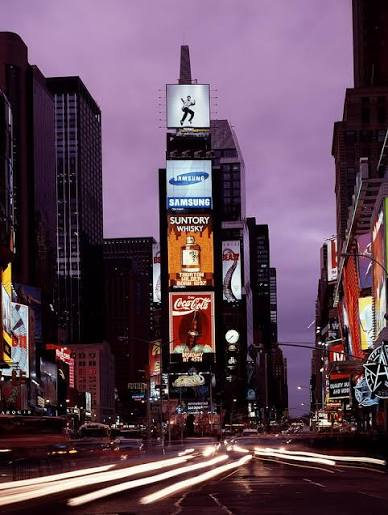
San Diego for Beaches, Parks, and Mild Winter Weather
San Diego’s advantage is that its best experiences split cleanly between free and paid, letting you build a trip around your budget rather than around one expensive anchor attraction.
Balboa Park can fill a half day or a full day on its own. Park access, gardens, and architecture are generally free to walk through, while individual museums inside the park charge separate admission. Balboa Park’s official accessibility information lists accessible parking and facilities, with mobility equipment available through visitor services subject to availability.
The USS Midway Museum, on the downtown waterfront near the Embarcadero, is the destination’s strongest paid attraction. Current official pricing lists adult admission at $39 and youth admission (ages 4 to 12) at $29, with children 3 and under free. Expect to spend 2 to 4 hours aboard. Accessibility is partial because of the historic ship’s ladders and enclosed spaces, though the museum offers accessible video tours for some areas that can’t be physically reached. Pets and companion animals are not permitted; trained service animals are accepted, with some areas potentially restricted by the ship’s layout.
La Jolla Cove, north along the coast, adds a free counterpoint: coastal walking and wildlife viewing, though current rules around beach access, parking, and pet restrictions should be checked directly before you go, since they can change seasonally.
Best for: families and outdoor-focused travelers who want a mix of paid and free sightseeing without needing to commit an entire budget to one attraction.
Trip length: 3 to 4 days.

Las Vegas for Entertainment Plus a Desert Day Trip
Las Vegas works best in this list when it’s treated as two different trips stitched together: an entertainment city and a desert landscape a short drive away.
The Strip itself is worth approaching as a sightseeing corridor in daylight hours, not only as a nightlife district. Architecture, themed resorts, and public spaces like the Bellagio Conservatory are viewable without a ticket to any specific show or club. The Neon Museum, north of the Strip, adds historical depth: current official pricing lists daytime admission from $25 for adults and $12.50 for children ages 7 to 17, with children under 6 free, and online reservations are strongly encouraged given holiday demand. The museum states it meets ADA accessibility requirements, and its outdoor Boneyard uses a fine gravel surface designed to accommodate wheeled mobility devices. A visit runs about 45 minutes to an hour.
Red Rock Canyon, roughly 20 minutes from the Strip, is the destination’s clearest escape from the city. Because timed-entry rules, scenic drive conditions, and winter hours can change, check the current system through the Bureau of Land Management’s official page before planning your visit.
Crowd note: Strip-area crowds during this week are substantial and concentrated. Downtown Las Vegas and Red Rock Canyon offer a meaningfully different pace than the Strip itself.
Trip length: 2 to 4 days.
New Orleans for Architecture, Food, and Cultural Sightseeing
New Orleans belongs on this list for daytime architecture and history, not nightlife, even though its Bourbon Street reputation often suggests otherwise.
The French Quarter is free to explore on foot, and a couple of hours spent walking past Jackson Square, the exterior of St. Louis Cathedral, and the surrounding historic streets covers the destination’s strongest free sightseeing. Streets here are historic and can be uneven, so this isn’t a citywide accessibility guarantee; individual venues and sidewalks vary.
The National WWII Museum, in the Warehouse District a short distance from the Quarter, is the destination’s major paid anchor and a substantial, multi-hour visit. Current admission, hours, and accessibility details should be confirmed directly on the museum’s official site before booking, since these specifics were not independently verified for this guide.
Pair a French Quarter morning with a Mississippi riverfront walk in the afternoon, then use the Warehouse District museum visit as a separate half-day block rather than trying to combine all three in one rushed day.
Best for: adults and couples focused on architecture, history, and walkable sightseeing more than nightlife.
Trip length: 3 to 4 days.
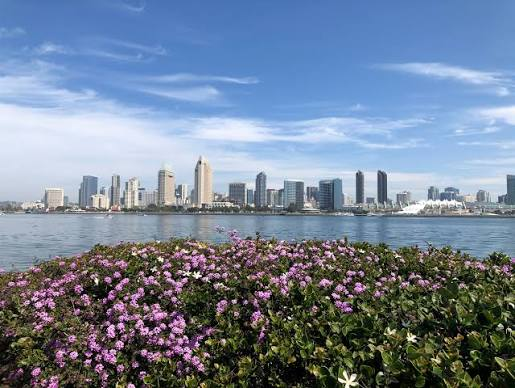
Orlando for Families Who Want More Than One Type of Attraction
Orlando’s case for this list is straightforward: no other destination here packs as many distinct, family-oriented attractions into one metro area.
Treat each theme park day as a full-day commitment rather than a quick stop. Current reservation systems, date-based ticketing, accessibility services, and height requirements vary by park and should be checked directly with each operator before you build your itinerary, since these details change frequently and shouldn’t be assumed to carry over year to year.
Not every day needs to be a theme park day. Winter Park, north of downtown Orlando, and Lake Eola Park offer a lower-intensity break between bigger attraction days, both largely free to explore.
Kennedy Space Center Visitor Complex, roughly an hour east, works well as a distinct day trip rather than a quick add-on. It gives families a science-and-history alternative to repeating theme parks, though current admission, timed experiences, accessibility, and parking details should be verified through the official visitor complex site.
Why reservations matter more here: holiday-week demand at Orlando’s major parks is intense enough that walk-up access to a specific park or experience is not reliable. Whatever you most want to do should be booked as soon as your travel dates are set.
Trip length: 4 to 6 days if combining more than one park.
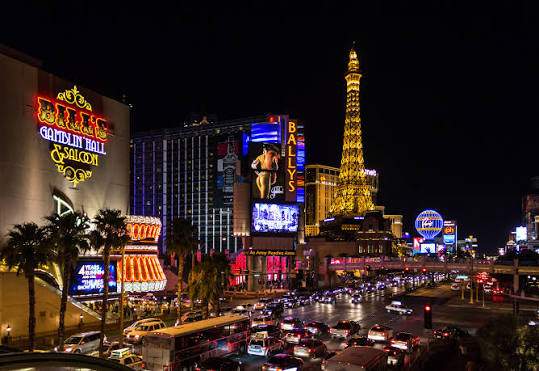
Miami for Beaches, Architecture, and Winter Sunshine
Miami’s strength in this list is combining beach access with a genuinely distinct architectural identity, something none of the other warm-weather options on this list offer in quite the same way.
South Beach and the Art Deco Historic District are free to walk, with Ocean Drive’s pastel facades forming one of the most recognizable architectural strips in the country. Public sightseeing and beach access don’t require a ticket, though parking and beachfront amenities add cost. Accessibility varies by specific route and beach access point rather than applying uniformly across the district.
Vizcaya Museum and Gardens, on the mainland rather than the Beach, is the destination’s cultural counterweight: an early-1900s estate and gardens that functions as a paid, half-day attraction. Current tickets, accessibility limitations, and pet policy should be checked directly on the museum’s official site before visiting.
Keep Miami Beach plans separate from mainland Miami plans in your itinerary. They’re a bridge apart but feel like different trips, and trying to combine both in a single rushed day usually shortchanges one or the other.
Trip length: 3 to 5 days.
Santa Fe for Art, Architecture, and a Smaller-Scale Holiday Trip
Santa Fe doesn’t compete with the bigger cities on this list by scale. Its appeal is a compact, walkable core built around adobe architecture, art, and high-desert scenery, which makes it a genuinely different kind of New Year’s trip rather than a smaller version of the same one.
Santa Fe Plaza is the free, historic starting point, and Canyon Road extends that same walkable structure through a concentrated stretch of galleries. The Georgia O’Keeffe Museum adds a strong indoor option and one of the destination’s clearest paid anchors; given holiday-period demand, current ticket pricing, timed-entry policy, and hours should be checked on the museum’s official site before your trip rather than assumed available at the door.
Weather reality check: Santa Fe sits at high elevation, and its winter weather runs cold rather than matching the milder Southwest image some travelers expect. Pack for a cold-weather city trip, not a desert escape.
Trip length: 2 to 3 days.
Seattle for Urban Sightseeing With Pacific Northwest Scenery
Seattle suits travelers willing to trade milder Southern weather for urban attractions layered with dramatic regional scenery.
Pike Place Market is free to enter and explore, with food and individual purchases the only real cost, and it connects naturally to a waterfront walk and Seattle Center. The Space Needle, within that same area, gives the trip its clearest paid, ticketed centerpiece; current pricing, timed-entry requirements, and holiday hours should be confirmed directly before booking, since these details shift seasonally.
Because Seattle’s winter weather runs cool and wet, build at least one indoor backup day into the itinerary rather than assuming outdoor plans will hold. A regional nature excursion, such as toward Olympic National Park, is realistic only on a longer trip; a short 3-day visit is better spent concentrated in the city itself.
Trip length: 3 to 5 days, longer if a regional excursion is part of the plan.
Colorado for Snow, Mountains, and Winter Activities
Colorado is the one entry on this list that isn’t a single city, and it shouldn’t be treated as one. The right base depends on whether skiing is the priority, how much driving you’re willing to do, and your budget.
Choosing between a dedicated ski-town trip and a city-based mountain trip changes the whole itinerary. A ski town puts slopes, rentals, and lift access within walking distance but usually means higher lodging costs and more limited off-slope options. A Denver-based trip offers more affordable lodging and easier flights, with mountain access as day trips rather than a full immersion.
Winter driving and altitude both deserve real planning attention here, more than anywhere else on this list. Mountain roads can require chains or specific tire ratings during storms, and altitude sickness is a genuine consideration for visitors arriving directly from sea level.
Best for: travelers who want the destination itself, not just an attraction within it, to feel seasonal and snow-covered.
Trip length: 3 to 6 days depending on how many mountain areas you’re combining.
Charleston for Historic Streets and a Milder Winter Escape
Charleston’s value proposition is specific: walkable, historic architecture in a winter climate mild enough to make extended walking comfortable, without the crowds or costs of the bigger warm-weather destinations on this list.
The historic district and Waterfront Park form the core of a free walking day, with Rainbow Row adding a well-known, no-cost photo stop along the same route. Several historic house museums are open for tours beyond that free core, each with its own hours and admission that should be checked directly rather than assumed standard.
Because winter daylight hours are shorter, plan museum and historic-site visits earlier in the day rather than backloading them into the afternoon.
Decide early whether this is a car-free city break, which Charleston supports well on its own, or the starting point for a wider coastal South Carolina itinerary, which would require a car and more travel days.
Trip length: 2 to 3 days for the city itself.
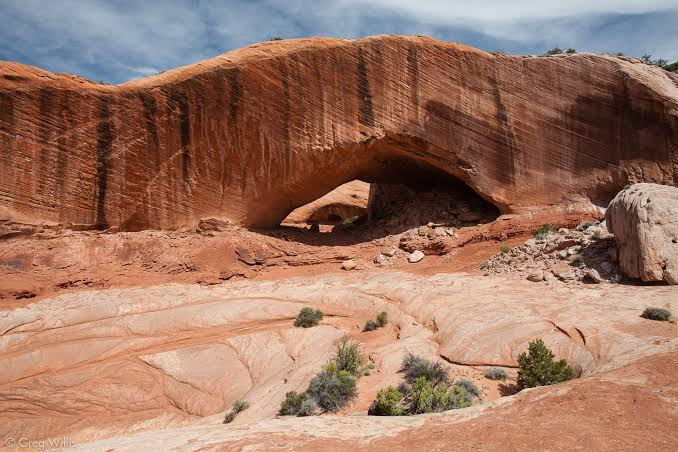
Southern Utah or Arizona for Travelers Who Want Natural Landscapes
This category exists on the list for travelers who specifically want dramatic natural scenery over city sightseeing, and it requires more flexible planning than any other destination here.
Let current park conditions guide your route rather than fixing an itinerary months in advance. The National Park Service advises winter visitors to check conditions, trip-planning information, and rapidly changing weather before visiting, since storms, road closures, and reduced services are all realistic possibilities during this season.
Winter daylight hours are short, some roads and facilities operate on reduced winter schedules or close entirely, and driving distances between major parks are longer than they appear on a map. Trying to combine multiple major parks, such as the Grand Canyon and Zion, into one short holiday trip usually means rushing both rather than experiencing either well.
Trip length: 4 to 7 days, concentrated on one or two parks rather than spread across several.
Best for: travelers comfortable with weather-dependent plans and longer drives in exchange for scenery unavailable anywhere else on this list.
Quick Comparison: Which USA Destination Is Right for Your Trip?
| Destination | Best for | Weather | Trip length | Car needed? |
|---|---|---|---|---|
| New York City | Urban sightseeing, first-time visitors | Cold | 3 to 5 days | No |
| San Diego | Families, outdoor travelers | Mild | 3 to 4 days | Helpful |
| Las Vegas | Entertainment plus desert scenery | Mild desert | 2 to 4 days | Helpful |
| New Orleans | Architecture, culture, couples | Mild | 3 to 4 days | No |
| Orlando | Families, multi-attraction trips | Mild | 4 to 6 days | Helpful |
| Miami | Beaches, architecture | Warm | 3 to 5 days | Helpful |
| Santa Fe | Art, compact walkable trips | Cold, high desert | 2 to 3 days | No |
| Seattle | Urban sightseeing, regional scenery | Cool, wet | 3 to 5 days | Helpful |
| Colorado | Skiing, snow, mountains | Cold, snow | 3 to 6 days | Helpful |
| Charleston | History, walkable coastal trips | Mild | 2 to 3 days | No |
| Southern Utah/Arizona | Natural landscapes, national parks | Cold, variable | 4 to 7 days | Yes |
Practical New Year’s Travel Tips for the USA
What to book before you travel
Flights and hotels come first, given how much demand rises across nearly every destination on this list during this week. After that, prioritize timed-entry attractions: theme park days in Orlando, the Neon Museum and Red Rock Canyon in Las Vegas, the USS Midway in San Diego, and the Georgia O’Keeffe Museum in Santa Fe all benefit from advance booking rather than walk-up plans.
How to check holiday hours
Go directly to each attraction’s official website, not a general destination guide, and check specifically for December 31 and January 1 hours. Many attractions operate on modified schedules during this window even when they’re open the rest of the year, and some smaller museums or historic sites close entirely for one or both days.
When public transportation is easier than driving
New York City, New Orleans, Santa Fe, and Charleston are all workable without a car, since their core attractions sit within walking distance or connect by public transit. San Diego, Las Vegas, Orlando, Miami, Seattle, Colorado, and the national park destinations are considerably easier with one, especially if your itinerary includes anything outside the immediate downtown core.
Why January 1 should be planned separately from December 31
Treat January 1 as its own day rather than an extension of New Year’s Eve plans. Some attractions close or run reduced hours specifically on January 1, crowds and transportation can be affected by the previous night’s events even where you weren’t part of them, and starting the day with a flexible, low-key plan avoids scheduling conflicts if something you expected to be open isn’t.
Free Versus Paid: What Each Destination Actually Offers
| Destination | Strong free option | Major paid option | Cost note |
|---|---|---|---|
| New York City | Central Park | MoMA ($30 adult) | Multiple paid attractions add up fast |
| San Diego | La Jolla, most of Balboa Park | USS Midway ($39 adult) | Individual Balboa Park museums charge separately |
| Las Vegas | Strip sightseeing | Neon Museum (from $25 adult) | Resort fees and parking vary by property |
| New Orleans | French Quarter | National WWII Museum | Food and guided tours can raise costs significantly |
| Orlando | Lake Eola, Winter Park | Theme parks | Major attractions require a substantial daily budget |
| Miami | South Beach walking | Vizcaya Museum and Gardens | Parking can add up over a multi-day stay |
| Santa Fe | Plaza, Canyon Road | Georgia O’Keeffe Museum | Individual galleries vary widely in price |
| Seattle | Pike Place Market | Space Needle | Weather often pushes travelers toward paid indoor options |
| Colorado | Scenic mountain drives | Lift tickets, rentals | Ski costs are the largest variable in the whole list |
| Charleston | Historic district, Waterfront Park | Historic house museums and tours | Guided tours can become expensive if stacked |
| Southern Utah/Arizona | Scenic viewpoints after entry | Park entry fees or passes | Lodging and transport often exceed admission costs |
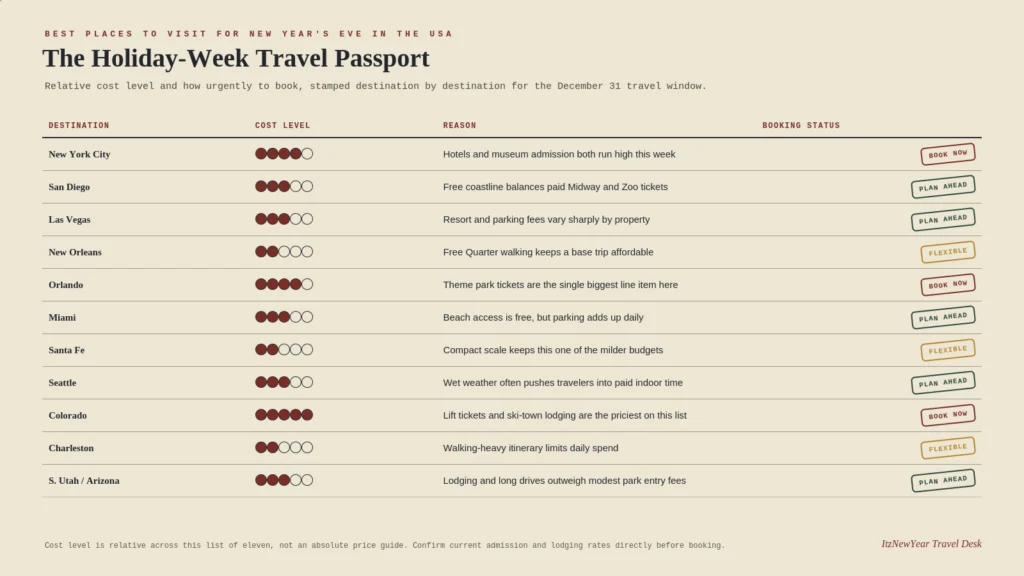
A free-heavy itinerary doesn’t automatically mean a cheap trip. Flights and hotel rates during this week can outweigh whatever you save on attraction admission, particularly for New York, Las Vegas, and Orlando.
Family, Accessibility, and Pet Considerations
| Destination | Best family attraction | Cold/rain backup | Pet practicality |
|---|---|---|---|
| New York City | Central Park | MoMA and other museums | Outdoor areas workable; verify park-specific rules |
| San Diego | Balboa Park | Museums inside Balboa Park | Varies by attraction; verify individually |
| Orlando | Theme parks, Kennedy Space Center | Indoor park attractions | Largely impractical for major attractions |
| Miami | South Beach | Vizcaya interiors | Beach rules are location-specific |
| Colorado | Snow play areas, ski schools | Indoor lodge facilities | Depends heavily on resort and trail rules |
Accessibility should never be treated as a single yes-or-no label for an entire destination. MoMA and Balboa Park both publish detailed accessibility information covering entrances, facilities, and equipment availability, which puts them ahead of many attractions on this list. The USS Midway, by contrast, offers accessible video tours for areas its historic ladders and enclosed spaces can’t physically accommodate, a meaningful limitation rather than a full accommodation.
Historic districts in New Orleans, Santa Fe, and Charleston depend heavily on the specific street and building; older sidewalks and structures are not uniformly accessible even within the same neighborhood.
Pet policies follow a similar pattern. MoMA and the USS Midway both prohibit pets while accepting trained service animals, which is a common structure across major indoor attractions. Outdoor spaces like Central Park, Balboa Park’s grounds, and historic downtown districts are generally more workable for travelers with dogs, though seasonal or area-specific rules still apply and should be verified rather than assumed.

Frequently Asked Questions
Is New Year’s Eve a good time to travel in the USA?
Yes, but it’s one of the busiest travel periods of the year. Destination choice, weather, attraction reservations, and holiday hours all matter more here than during an ordinary winter trip, so building in flexibility and booking key pieces early makes a real difference.
What is the best warm place to visit for New Year’s Eve in the USA?
San Diego, Miami, and Orlando are the strongest warm-weather choices on this list, though the right pick depends on whether you want beaches, family attractions, or a mix of outdoor sightseeing.
Where can I visit in the USA for New Year’s without going to a party?
Santa Fe, Charleston, San Diego, and the national park destinations in Southern Utah and Arizona all work well for travelers who want sightseeing without building the trip around nightlife.
What is the best destination for families?
Orlando is the clearest answer given its density of family-specific attractions, with San Diego a strong alternative for families who want a mix of outdoor time and museums without the same scale of theme park planning.
What is the cheapest type of New Year’s Eve trip?
There’s no single cheapest destination. A city with mostly free attractions can still be expensive once flights and holiday hotel rates are factored in, so total trip cost matters more than attraction pricing alone. Charleston and Santa Fe tend to run more moderate overall than New York, Las Vegas, or Orlando.
Which attractions require advance reservations?
Timed museums, theme parks, some national park access systems, and popular attractions like the Neon Museum and Georgia O’Keeffe Museum can all require advance booking, especially during this high-demand week. Check each attraction’s current policy directly rather than assuming walk-up access will be available.
Choosing Your Trip
If you’re still deciding, work from the type of trip you want rather than a destination’s reputation. Urban sightseeing points toward New York, Seattle, or Santa Fe. Warm weather points toward San Diego, Miami, or Orlando, depending on whether beaches or family attractions matter more. Snow points toward Colorado. Culture and architecture point toward New Orleans or Charleston. Natural landscapes point toward Southern Utah or Arizona, with the understanding that this trip needs the most flexible planning of the eleven. Whichever direction you choose, confirm your key attractions are actually open on your travel dates and book anything timed-entry as soon as your dates are set.
Leave a Reply
You must be logged in to post a comment.